Publication Update

I’ve recently received the proofs of my L/PA article from Brill. Going through them one final time, I find it nothing short of incredible that I am still finding typos and other minor errors. In any event, it will appear in NovT 55.2, likely in April or May, so it’s probably too early to line up outside your local Wal-Mart. One neat fun fact: my faculty mentor here, Dan Wallace, recently told me that he too had his publishing debut in NovT. I figure if I publish a tenth of what he’s published over the years I’ll probably be doing okay.

I’ve also just submitted my article “Judas Remembered: The Betrayer of Jesus in Early Christian Memory” to the Journal for the Study of the New Testament. Dale Allison and Samuel Byrskog were kind enough to provide feedback on a draft of it, confirming something I’d discovered with my earlier paper: there is a real collegiality among scholars in this field. Why some of these senior, highly-respected, and no doubt incredibly busy professors would take time to read and comment on an article sent to them unsolicited from a random master’s student is beyond me, but I hope that I’ll be able to do the same for others some day (provided, of course, anyone is interested in my thoughts on anything!).

Posted in Uncategorized | Tagged | Leave a comment

Faith, History and Certainty

What is the relationship between faith and historical certainty? In the conclusion of my thesis (on N. T. Wright’s historical method), I highlight a quotation from Beth M. Sheppard on this relationship. As Sheppard writes, “it is easy for historicism as a method to become conflated with issues of faith on a number of levels, perhaps not least of which is the unspoken assumption that known facts and an objective basis for faith would resolve conflicts of interpretation and result in a unified history, a unitary understanding of the Christ event, and, ultimately, a single faith tradition that would transcend denominationalism” (The Craft of History, 123-4).

In my thesis, I contrast the modernist view of history (historicism or positivism) with a more nuanced view that incorporates some (but not all) of the insights of postmodernism, exemplified by Wright’s critical realism (developed by the Jesuit philosopher Bernard Lonergan and NT scholar Ben F. Meyer). Whereas historicism viewed history as an objective, empirically verifiable science (that is, the scientific method could be used in history just as in biology or chemistry), critical realism insists on an element of subjectivism, especially insofar as every historian comes to the study of history with certain biases and presuppositions.

Historians and philosophers of history, as well scholars from most other fields, moved away from modernist historicism/positivism decades ago. Yet, in many of today’s conservative Christian circles, there is still a pronounced tendency to hold on to modernism’s black and white way of looking at things, especially when it comes to issues of history. “Truth” and “inerrancy” are defined in ways that would be unrecognizable to anyone in the first century (and many, many centuries before and after that).

What is ironic, however, is that despite seeming to offer certainty regarding historical matters important for Christianity, historicism is actually antithetical to Christian faith. Apart from the fact that historicism as a method has been demonstrated to be deeply flawed, even if historicism were able to follow through on its promise to provide objective certainty on matters of Christian history, what then would be the role of faith, central to the biblical understanding of what it means to follow God?

One of the most pervasive ways I have seen historicism manifested in my circles is the belief that by just following the right method (be it a naive inductive approach or a more sophisticated exegetical procedure), one can accurately (and objectively!) interpret the Bible. Just do a proper word study, validation, or background study, and viola! you’re on your way to a correct interpretation. And these are indeed all important, and good, things. I believe in these methods very much. But we are naive if we think that that’s all there is to it. What critical realism demands is an exegetical humility that recognizes the subjective factors involved in reading and interpretation, as they relate to both the text and the interpreter. As noted in my last post, theological interpretation is one means of taking the subjective element of interpretation into account. There are more.

But my point here is merely that a historical method that does not claim absolute certainty, but instead only relative levels of more or less confidence, actually is better for a faith perspective. Whether I judge something on historical grounds to be very, somewhat, or not probable, faith provides the necessary bridge. Those thinking in a modernist paradigm might find this way of thinking frightening or threatening, but in my own experience I have found it to be liberating: I don’t feel like I have to cook the historical evidence to get the desired result at the end, because it’s not certainty I’m after; what I am after is faith.

Posted in Evangelicalism | Tagged , , , , , | Leave a comment

Textual Temptation

imagesWe all want to be “objective” readers of the Bible, yes? But if postmodernism has one distinct advantage over modernism, it is its recognition that an “objective” reading is in reality impossible, because we all come to the text with certain presuppositions and points of view. Recently, some scholars from the “theological interpretation of Scripture” movement have argued that a Christian interpreter’s faith commitment is actually an asset, rather than something to be ignored or disavowed.

Markus Bockmuehl, in his thought-provoking Seeing the Word: Refocusing New Testament Study (Grand Rapids: Baker Academic, 2006), illustrates this point with reference to the temptation stories of Eve and of Jesus. In both of these, he contends, “interpretation in each case reduces the divine address to an object for analysis as if from an Archimedean point outside, by staking a pseudoempirical claim to objectivity” (92).

Let’s start with Genesis 3: Bockmuehl sees a three-step hermeneutical temptation. Step One: “to eliminate the ecclesial reception of the word of God and to place interpretation in the hands of the autonomous reasoning subject, isolated from the worshiping community” (93). And so, the serpent asks Eve about God’s word apart from Adam or God’s “presence,” so to speak. “Thus the living word of God is rendered harmless as the object of solitary analysis, a mere cadaver except as energized by the expert’s alchemy of method” (93). Eve adopts a detached, individual perspective to God’s command. Step Two: relativize or eliminate the plain sense of Scripture. The serpent twists and caricatures what God had actually said concerning eating from the tree. “Reduced to autonomous reason, Eve finds the devices and desires of her own heart seductively co-opted by the serpent’s hermeneutics” (93). Similarly, the serpent reinterprets the promise of judgment in a more palatable fashion. Step Three: “move in for the hermeneutical kill” by appealing to human nature and its lust for the forbidden and for power (94). Despite her sincere belief that she is accurately, objectively interpreted God’s word, Eve ends up doing the precise opposite of what God had commanded, and Adam follows.

Note the parallel and contrast with the temptation of the Second Adam: Jesus is tempted by Satan to interpret Scripture as an autonomous reasoning subject (exhausted, hungry, and alone in the wilderness), to relativize what God has said (“If you really are the Son of God…”), and to give in to the lust for power (“All the kingdoms of this world…”). Jesus, unlike the First Adam, passes this test. And so “by this hermeneutical reversal of the fall, faithfully sustained through the depths of Gethsemane and the cross, the risen Jesus has become the key to Scripture itself” (96). By this, Bockmuehl means that “transformed reason and Spirit-given, Christ-centered wisdom are essential to the Christian interpreter’s task” (92).

Elsewhere, Bockmuehl makes clear that he believes that non-Christians can do incredible work in studying and teaching the biblical texts (77). Anyone who suggests otherwise (and I have heard it thus suggested) is incredibly naive. But Bockmuehl is correct, I believe, in arguing that Christian interpreters have a unique gift to offer the scholarly community by reading the biblical texts from the perspective of the texts’ implied exegete – that is, as a disciple. Christian or non-Christian, approaching the biblical text with an awareness of the strengths and limitations of one’s presuppositions is a far better method than to pretend to be “objective.”

Posted in Hermeneutics | Tagged , , , , | Leave a comment

Pauline Hermeneutics (Part 2): Enter Cicero!

Cicero is always a helpful ally in any argument. And in chapter 2 of her book, Mitchell grounds her argument in the standard techniques of ancient rhetoricians like Cicero. The primary text in question is 1 Cor 5:9-11, which Mitchell identifies as Paul’s first act of “self-exegesis.” In these verses, Paul writes, “I wrote you in my letter not to associate with sexually immoral people. In no way did I mean the immoral people of this world, or the greedy and swindlers and idolaters, since you would then have to go out of the world. But now I am writing to you not to associate with anyone who calls himself a Christian who is sexually immoral…” Whereas some of the Corinthians were misreading Paul by literally globalizing his instructions, Paul here defends one particular interpretation of his previous words on account of 1) the exact wording of the text, and 2) the logical meaning and practical result of the text.

Mitchell argues that what Paul is doing here was common in ancient rhetoric. The ancients realized that texts could be interpreted different ways, which led to the need for Mitchell’s “agonistic paradigm.” As her chief example, Mitchell analyzes Cicero’s De 220px-CiceroBustinventione, which offered a list of criteria and rhetorical strategies by which to argue if a text should be understood literally or figuratively. This was not an invention of Cicero but rather a traditional set of commonplaces known throughout the ancient world. For instance, the interpreter might appeal to everyday speech, literary context, the character of the author, or the consequences of the opponent’s reading to support either a literal or a figurative reading. And this is precisely what Paul is doing in 1 Cor 5:9-11. As it would be impossible to comply with the misunderstood command (utter separation from the entire world), this could not have been what Paul meant.

Here’s the upshot: the ancients did not universally practice literal or figurative interpretation. Rather, they drew from a common set of rhetorical criteria to argue for or against their case. As Mitchell puts it, “The agonistic paradigm is inherently dualistic and combative” (26). And, to summarize, these rhetorical strategies “are not linguistic or hermeneutical theories that represent an absolute commitment or a systematic philosophical engagement with the relationship between text and meaning; they are fragments of linguistic theories used to buttress a particular interpretation on well-known terms” (27). This shatters the myth of the absolute wall between the schools of Alexandria and Antioch and is equally challenging to today’s Bible teachers (and Seminary professors!) dead-set against allegorical interpretation (especially when it comes to eschatological imagery…).

Of course, in evaluating this chapter we find ourselves back in the well-known place of wondering just how thorough Paul’s classical education would have been. I suspect he was indeed trained in the best of Greco-Roman rhetoric, but the extent to which he consciously drew on that remains up for debate. Did he read Cicero? Probably. But even if he did not, I suspect certain rhetorical conventions were familiar enough in the ancient world that we shouldn’t be surprised to see them in his writings.

Posted in Paul | Tagged , , , , | Leave a comment

Pauline Hermeneutics (Part 1)

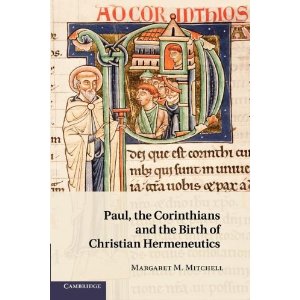
Paul would have made a poor evangelical. As it is commonly described, the early church was divided between those who interpreted the Bible literally and those who interpreted it allegorically. In their day, and even more in ours (poor Augustine gets routinely thrashed for his interpretation of the Good Samaritan in most conservative circles), the allegorists have suffered a fair amount of abuse. But what has always made me uncomfortable is that Paul himself used allegory: Gal 4.20-31 is a clear enough example of that. What do we do with this? A (relatively) new book promises to shed light on this issue.51y-A51BNnL._SL500_AA300_

When Ben Witherington described Margaret Mitchell’s new book Paul, the Corinthians, and the Birth of Christian Hermeneutics (Cambridge: CUP, 2010) as a “gold mine” and perhaps even a “vital visionary text,” I knew this was something that I wanted to read and read carefully. And given my interest in early Christian hermeneutics, this book quickly found its way to the top of my reading pile. Though its six chapters (corresponding to a series of lectures Mitchell gave at Oxford in 2008) amount to only 115 pages, there is indeed more gold to be extracted from this book than almost every book I was required to read for Seminary. This is the first of a series of posts in which I walk through the argument of the book and evaluate or highlight points of particular interest.

Mitchell represents a growing movement in patristic studies to tear down the dividing wall, the hostility, between the two camps of interpretation. As is increasingly recognized, many Fathers utilized both methods at different times. But did they merely switch from one to the other in a purely arbitrary fashion? Mitchell’s thesis in this book is that early Christian exegesis was primarily in the service of “utility to the purpose at hand, however contextually defined” (x). And not only this, but this utilitarian hermeneutic began with Paul himself, specifically in his letters to the Corinthians.

Chapter 1 lays the groundwork for the book as a whole. Mitchell begins by quoting and analyzing Gregory of Nyssa’s prologue to his Commentary on the Song of Songs, in which she argues that Gregory sought the “useful” reading above all, whether that was found in the literal or the figurative reading, and defended this with reference to Paul (Gal 4.24; 1 Cor 9.9; 10.11; 13.12; 2 Cor 3.6; 3.16). Thus, as Mitchell observes, Gregory’s defense of allegory comes primarily from Paul’s Corinthian correspondence. Mitchell spends much of the rest of the chapter arguing her point that the Corinthian letters represent the example par excellence of Paul’s hermeneutical method. 1 and 2 Corinthians, of course, allude to other, non-extant Pauline writings to the church at Corinth, but further negotiation of Paul’s meaning can be seen if 2 Corinthians itself is broken into its composite sources (a position I slightly favor, but who can say for sure?). Here’s Mitchell’s conclusion:

Back and forth over these six (surviving) letters, in the course of his sometimes tortured correspondence with the Corinthians, Paul negotiated and renegotiated the meanings of his prior utterances. As he did so, Paul was, as it turns out, not only honing arguments for later use in Galatians and Romans and beyond, but was in effect fashioning the building blocks of Christian hermeneutics” (8).

Mitchell identifies two areas of Pauline interpretation. First, there is Paul the interpreter of Israel’s Scriptures, in which Paul “interprets or invokes scripture that were to provide both exegetical terminology and exegetical precedent for early Christian interpretation” of both Testaments (9). Second, there is Paul the interpreter of his own correspondence, defending his writings from misunderstanding, misinterpretation, or abuse. This latter point is Mitchell’s real concern, as it is here that we can see how misunderstanding of Paul’s writings led to Paul’s efforts to clarify his meaning; “the process of writing, reading, rewriting, renegotiating words and reality unfold before our very eyes” (10). Mitchell’s contention is that these efforts required both literal and allegorical interpretation, and that (following rhetorical conventions of the day) Paul selected the interpretation that best advanced his argument. Mitchell calls this the “agonistic [from the Greek ἀγών, “competition, contest”] paradigm of interpretation” in which “texts are treated as witnesses for or against one’s own case, and employed as witnesses” (16). This agonistic paradigm is the thesis which will be unpacked in the following chapters.

One interesting aside: Mitchell references a fourth-century work by “Adamantius” called “Concerning Right Faith in God,” and remarks that she is not aware of any English translation. This is mostly true: while the Greek περι της εις θεον ορθης πιστεως is untranslated in English, Robert A. Pretty has translated Rufinus’ Latin version of the text into English. In any event, it shows how much translating work still needs to be done concerning the ante-Nicene writers!

Posted in Paul | Tagged , , , , | Leave a comment

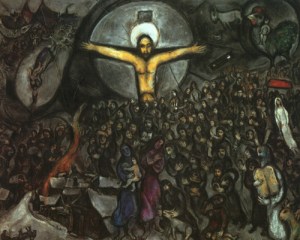
Jesus’ Exodus: Christological Exegesis in Jude

tumblr_lwtq96oU641qa0m3lo1_500-1

The new edition of the Nestle-Aland Greek New Testament that came out this fall features a major revision of the apparatus in the Catholic epistles as the result of intensive text-critical research on those letters in recent years. Accordingly, there are a few places that the reading of the text has changed. One of these of particular interest to me is at Jude 5.

NA27, along with most English translations (NIV, NRSV, NASB, NKJV), describes how at the time of the Exodus “the Lord (κύριος), having saved the people out of the land of Egypt, later destroyed those who did not believe.” Yet NA28 (as ESV and NET had already printed) instead reads that “Jesus (Ἰησοῦς), having saved the people out of the land…” Why the change?

The manuscript evidence has always been on the side of Ἰησοῦς, with support from some of the earliest and best Alexandrian witnesses, including Codex Vaticanus. But many text critics simply found this reading too difficult: how could Jude have written that Jesus acted in the early history of Israel? Reports eminent text critic Bruce Metzger, concerning the earlier decision in favor of κύριος: “a majority of the Committee was of the opinion that the reading [Ἰησοῦς] was difficult to the point of impossibility, and explained its origin in terms of transcriptional oversight,” likely because of the “strange and unparalleled mention of Jesus in a statement about the redemption out of Egypt” (Textual Commentary, 657). Metzger does, however, note 1 Cor 10:4 as a possible parallel (the rock from which the Israelites drank during the Exodus was in fact Christ).

The fact is, as 1 Cor 10:4 demonstrates, Christological exegesis is not a later, patristic development, but a very early one. After all, 1 Corinthians is one of our earliest works in the entire NT (A.D. 55?). We should not, therefore, be so surprised to see it in a later NT writing such as Jude. The NA28 is correct in making this change, and hopefully other English translations will follow. For more, see the published article by another of Dan Wallace’s students: Philipp Bartholoma, “Did Jesus Save the People out of Egypt? A Re-examination of a Textual Problem in Jude 5,” NovT 50 (2008): 143–58.

Picture: Marc Chagall, Exodus (1952)

Posted in New Testament | Tagged , , | Leave a comment

In Layman’s Terms: Christological Exegesis

Previously on this page, I referenced a famous passage from early Christian literature in which Ignatius, bishop of Antioch, describes a debate he had with some members of a Judaizing party who refused to accept Ignatius’ teaching regarding Jesus because this teaching was not found in the Old Testament (“the archives”). Ignatius responded that Jesus was in fact found in the Jewish Scriptures, and that the only proper way of interpreting Scripture is in light of Jesus’ life, death, and resurrection (Phil. 8.2).

This method of interpreting Scripture is called christological exegesis, and it was a common form of interpretation in the early church. According to this view, all of the Old Testament points to and foreshadows Jesus of Nazareth. Irenaeus of Lyons, a second century bishop and apologist, summarizes this hermeneutic well: “If any one, therefore, reads the Scriptures with attention, he will find in them an account of Christ, and a foreshadowing of the new calling. For Christ is the treasure which was hid in the field, that is, in this world (for “the field is this world”); but the treasure hid in the Scriptures is Christ, since He was pointed out by means of types and parables” (Adv. Haer. 4.26.1). The OT, therefore, is only read correctly when it points to Christ – and not just OT prophecies of Messiah, but all of the Old Testament. In effect, the NT is read back into all of the OT, as later Christian perspective provides a “hermeneutical key” for unlocking the “true meaning” of OT texts. In modern times, this approach to Scripture has fallen out of favor as readers instead pursue authorial intent and the single “original” meaning of a given text. But, given that the direct descendants of the apostles found this hermeneutic to be meaningful (if not necessary for Christians), I think it’s worthy of more attention than the usual scorn we tend to heap on it.

Before we can ever get to questions of how this method of reading works and whether it is a violation of the canons of valid interpretation, two examples will suffice to show how christological exegesis worked in the early church. The first example comes from Clement  of Rome, writing sometime in the second half of the first century. In a discussion on examples of faithfulness in the OT (1 Clem. 9-12), Clement retells the story of Rahab, the prostitute who helped Joshua take Jericho (1 Clem. 12:1-7; cf. Josh 2). Clement concludes his summary of the story with the following note regarding the scarlet cord that Rahab tied to her window to guarantee her protection from the invading Israelites: “And in addition they [the Israelite spies] gave her a sign, that she should hang from her house something scarlet – making clear that through the blood of the Lord redemption will come to all who believe and hope in God” (1 Clem. 12:7). Clearly, the “original meaning” or “authorial intent” of the writer of Joshua did not have Christ’s bloody death on the cross in mind, so this is a clear example of the early Christians reading their faith back into the OT through typology.

A second example is found in the Epistle of Barnabas, another early Christian document that likely originated in Alexandria in the late first or early second century. “Barnabas” devotes a large portion of his letter (Barn. 6:8-16:10) to allegorical interpretation of the OT along these lines. Barnabas interprets much of the OT Levitical law in light of God’s salvation in Christ, going so far to criticize the Jews for interpreting the food laws of the OT literally, when they were instead originally meant to have strictly a spiritual sense. Thus, to eat an animal that has a divided hoof in fact means to associate with a righteous person who “not only lives in this world but also looks forward to the holy age to come” (Barn. 10:11). In contrast to these ancient Jews who misunderstood the true force of the Law, Barnabas argues, “we, having rightly understood the commandments, explain them as the Lord intended. He circumcised our ears and hearts for this very purpose, so that we might understand these things” (Barn. 10:12).

Poor Clement and Barnabas: these texts are met with little more than laughter when I’ve heard them read in classes, an example of the worst kind of exegesis. And indeed, they do flagrantly violate the basic rules of historical-grammatical or historical-critical exegesis, the approaches that characterize almost all biblical studies today. The fact that Paul uses exactly the same method of interpretation (Gal 4:21-31, re: Sarah and Hagar) is something of an embarrassment to many scholars of a more conservative stripe, who twist themselves into hermeneutical contortions by arguing that such interpretation was acceptable for the Apostle Paul only (the fact that his disciples and the disciples of the other apostles continued to use the same method of interpretation, presumably with their blessing, seems to be completely ignored), whereas it is forbidden for all other interpreters, ancient or contemporary. Thus, if the NT writers don’t specifically identify a point of typology, it’s off-limits for us today, merely a case of “crass allegory” and a futile exercise in creative eisegesis.

What if, however, in selling ourselves to be placed under the yoke of a modernist hermeneutic, we Christians are missing out on an aspect of what it means to truly read Scripture as a Christian? But are there any limits on christological exegesis (that is, allegorical interpretation)? Was there any rhyme or reason for its practice in the early church, or was it completely arbitrary? With these questions in mind, in the coming weeks I’d like to share some insights on this matter that a new book from Margaret Mitchell has provided.

Posted in Patristic Exegesis | Tagged , , , , , | 3 Comments

Imaging the Gospel Evangelists

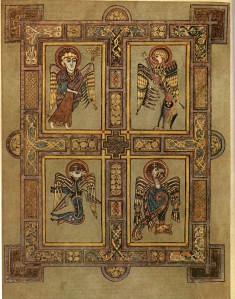
4evangelists-lgIn my seminar on the Theology of the Middle Ages, I came across a beautiful poem by Adam of St. Victor (d. 1146) on the Four Evangelists that draws on the rich Christian tradition of identifying the Gospel writers with the four “living creatures” around God’s throne (Rev 4:7, drawing in turn on Ezek 1:10). It appears the first written record we have of this connection is from Irenaeus of Lyons in the second century (Adv. Haer. 3.11.8), who argued the four living creatures were “images of the dispensation of the Son of God,” which are in turn reflected in the quadriform Gospel.

What is interesting, though, is that while this connection between the living creatures and the Evangelists is common in early Christian tradition, there is little uniformity as to which creature represents which Evangelist. Irenaeus had Matthew as the Human, John as the Lion, Luke as the Ox, and Mark as the Eagle. Conversely, Augustine had Matthew as the Lion, John as the Eagle, Luke as the Ox, and Mark as the Human. Jerome had Matthew as the Human, John as the Eagle, Luke as the Ox, and Mark as the Lion. This last arrangement appears to be the one that dominated later church tradition.

In any event, here’s the poem from Adam of St Victor (trans. from R. C. Petry, Late Medieval Mysticism, 113-115), which highlights his reasons for associating each Evangelist with each living creature. Note too Adam’s connection to the four living streams flowing from Eden:

OF THE HOLY EVANGELISTS

O be joyful, faithful nation! / Seed of God’s own generation! / Mindful of the revelation / In Ezekiel’s prophecy: / In that witness John uniteth, / Who the Apocalypse inditeth: / “Witness true my pen writeth / Of what truly met mine eye!”

Round the footstool of the Godhead, / ‘Mongst the blessed saints included, / Stand four creatures there embodied, / Diverse in their form to view. / One an eagle’s semblance weareth, / One a lion’s likeness beareth, / But as a man or ox appeareth / Each one of the other two.

As Evangelists, these creatures / Figure forth, in form and features, / Those, whose doctrines’ stream, like nature’s / Rain, is on the church outpoured; / Matthew, Mark, and Luke portraying, / Him, too, who his sire obeying, / By the nets no longer staying, / Came to follow thee, O Lord!

Matthew as the man is treated, / Since ’tis he, who hath related, / How from man, by God created, / God did, as a man, descend. / Luke the ox’s semblance weareth, / Since his Gospel first declareth, / As he thence the law’s veil teareth, / Sacrifices’ aim and end.

Mark, the lion, his voice upraises, / Crying out in desert places: / “Cleanse your hearts from all sin’s traces; / For our God a way prepare!” / John, the eagle’s features having, / Earth on love’s twain pinions leaving, / Soars aloft, God’s truth perceiving / In light’s purer atmosphere.

Thus the forms of brute creation / Prophets in their revelation / Use; but in their application / All their sacred lessons bring. / Mystic meaning underlieth / Wheels that run, or wing that flieth; / One consent the first implieth, / Contemplation means the wing.

These four writers in portraying / Christ, his fourfold acts displaying, / Show Him – thou hast heard the saying – / Each of them distinctively: / Man – of woman generated; / Ox – in offering dedicated; / Lion – having death defeated; / Eagle – mounting to the sky.

These four streams, through Eden flowing, / Moisture, verdure, still bestowing, / Make the flowers and fruit there growing / In rich plenty laugh and sing: / Christ the source, these streams forth sending; / High the source, these downward trending; / That they thus a taste transcending / Of life’s fount to saints may bring.

At their stream inebriated, / Be our love’s thirst aggravated, / More completely to be sated / At a holier love’s full fount! / May the doctrine they provide us / Draw us from sin’s slough beside us, / And to things divine thus guide us, / As from earth we upward mount! Amen.

(image: Book of Kells, c. 800)

Posted in Wirkungsgeschichte | Tagged , , , | Leave a comment

A “Noun-Epithet” Formula for Judas Iscariot?

ncd04475I’m currently researching Judas Iscariot from the perspective of orality and memory study, which has recently been influential in historical Jesus circles (e.g., James Dunn, Dale Allison, and Anthony Le Donne, to name a few). These scholars have analyzed how oral transmission and memory work in predominantly oral cultures, and have applied those insights to the decades between Jesus’ ministry and the composition of the written Gospels.

One key mark of oral tradition is the use of the so-called “noun-epithet” formula. These were first identified in regards to Homeric poetry: “wide-eyed Athena,” “swift-footed Achilles,” and so forth. These “character tags” that would be repeated most of the times a character’s name was mentioned and served many purposes, including emphasizing key details, helping with the performer’s memory, and aiding the audience’s understanding.

Turning, then, to Judas, I’ve noticed an interesting feature: apart from the narrative of Judas’ betrayal itself, nearly every reference to Judas Iscariot in the Gospels employs a noun-epithet formula. Thus, in Matt 10:4, 26:25, 27:3, Mark 3:19, John 6:71, 12:4, 18:2, and 18:5, a reference to Judas is followed by the epithet “the one who (would) betray(ed) him.” The Greek verb παραδίδωμι (“to hand over, betray”) features in all of these verses. The one exception is Luke 6:16, in which Judas is instead labeled a “traitor.” In any event, this suggests that, assuming an oral model of the Gospel traditioning process along the lines of what Dunn has proposed, the identification of Judas as “the one who betrayed [Jesus]” is an early and widespread feature of early Christian memory. What is most interesting in this case is the parallels between the Synoptic tradition (especially Matthew) and the Fourth Gospel. These are widely held to be independent streams of tradition, and so the consistency of this parallel is all the more striking. We are likely in touch with very, very early tradition.

Posted in New Testament | Tagged , , | Leave a comment

Tips for NT Exegetical Papers at DTS

Having graded several dozen exegetical papers for NT104, and NT105, I’ve seen it all: the good, the bad, and the σκύβαλα. There is, however, a consistent set of things that I write on paper after paper, and in the hopes of improving your grades (and easing the burden on some future graders!), I offer these tips for how to make your exegeticals shine. I’ve divided them into two categories: “basics” and “advanced.”

BASICS

1. PROOFREAD!!! Even a cursory use of spell check would improve many papers (but watch out for Gentiles-Gentles, angels-angles). If English is not your native language, consider having a spouse, roommate, or friend help. But for those of us who have grown up speaking English and hold high school and university degrees, a basic level of editing for spelling and grammatical mistakes is the sine qua non of your exegetical. Note that in American English, periods and commas follow parentheses (like so). Formatting and abbreviations should follow department and SBL standards.

2. Follow directions. I can’t stress this enough: look through the grading rubric to make sure you’re doing everything asked of you. Your translation should be a free, “living” one that interprets all of the images and “Christianese.” Imagine translating the passage for those with no Christian background and with a simple literacy level. For your exegetical statement and outline, every point MUST take an adverbial subject (“The means…”). Make the headings in your commentary concise and catchy. Be sure to follow the recommended page length for each section: having outlines, word studies, and applications that are too long but a commentary that is several pages short is a sure way to earn a low grade.

3. Substantiate your claims with the proper tools. This means using lexical tools to make lexical claims, grammatical tools for grammatical points, and commentaries for broader insights. Make sure to use “cf.” when you’re citing a general point (e.g., the nature of the constative aorist) as opposed to a specific usage not given in the source (e.g., the aorist in Eph 5:24 means…).

4. Type Greek correctly. Make sure you use a Unicode font. Grave accents must be changed to acute accents when English follows (that is, at the end of a string of Greek text).

5. Significance, significance, significance. “X is the predicate nominative of Y” doesn’t really help me understand the passage any better: be careful of simply identifying morphological forms or syntactical categories. Be sure to explain the significance of anything you note. Also, make sure that your appendices (TC, word studies, and validations) state the significance of the problem for exegesis up front.

6. Use a variety of tools and reference materials. For lexical tools, use TDNT or EDNT instead of just BDAG (n.b.: BAGD is the older edition and should not be used). For grammars, go beyond ExSyn and use BDF or Robertson. And for commentaries, don’t just quote Hoehner or other conservative scholars: consider using Markus Barth’s Anchor Bible commentary, to give one example. The Bible Knowledge Commentary is NOT an acceptable resource.

7. Don’t short-circuit your validations. Make sure you evaluate the relative strengths and weaknesses of different arguments (don’t just list them). Bring up unresolved problems and surface problematic assumptions. Be thoughtful and thorough. Also, be advised that “context” is not enough of a validation: what specifically in the context are you appealing to and why?

ADVANCED:

1. Bring in backgrounds (remember NT113?). By backgrounds, I mean OT references or allusions, intertestamental or rabbinic Jewish literature, and Greco-Roman sources (especially in areas like rhetoric). Relevant archaeological data might also fit under this category.

2. Bring in secondary scholarly literature. Search New Testament Abstracts for journal articles on your passage. For NT studies, your best bet would be articles in New Testament StudiesJournal for the Study of the New TestamentJournal of Biblical Literature, and Novum Testamentum. Similarly, the library likely has several different published dissertations or volumes in major monograph series on issues related to your passage. Finally, consider monographs with a broader scope: for Ephesians or Romans, consider what James D. G. Dunn’s The Theology of Paul the Apostle has to say on the issues raised in your passage. For Romans, see also the very interesting new book by Douglas Campbell, The Deliverance of God: An Apocalyptic Rereading of Justification in Paul. Consulting the Scripture indices in the back of these books can help save you time.

3. Bring in foregrounds. The current scholarly trends emphasizing reception history should be welcomed with open arms: other centuries of Christians might after all have something worthwhile to share with us! An easy way to do this is to find the relevant volume in IVP’s Ancient Christian Commentary on Scripture series and turn to the passage you’re working on. Other series focus on medieval and Reformation-era commentary. I’m most interested in patristic-era interpretation, but the more you can show awareness that there is not an “empty gap” between the writing of the biblical text and our day, the better.

4. Beware of generalizations. “The Jews were legalistic” or “The Jews hated Gentiles” unfairly group all Jewish people into one monolithic, negative entity. This is both unfair and inaccurate. As with all people groups, there were almost certainly some that felt this way. But, at the same time, there were many (perhaps a great majority) who did not. Imagine if years from now someone wrote “All DTS students were fundamentalists.” So try to add more nuance: “Paul challenges those Jews who viewed their circumcision as…” or “Hellenization led some elements of Jewish society…” In general, try to avoid beginning a sentence with “The Jews”; if Paul does groups “the Jews” together rhetorically, go with “Paul argues that ‘the Jews’…”

Good luck!!

Posted in Seminary | Tagged , , | Leave a comment