 What do scholars mean by the words typology and allegory? Incredibly, though these two terms describing non-literal interpretation are crucial for understanding how scripture was read in early Christianity, there is very little consensus on what exactly they mean, or even if there is any difference between them! Below is a brief presentation of one influential way of understanding typology and allegory. But before we can do that, two points by way of introduction:
First, we must note that the distinction between the English words “typology” and “allegory” is a modern one, not an ancient one, as it was first introduced in the twentieth century. To compound matters, the Fathers used the Greek antecedents of these words in ways that don’t easily conform to any of the modern definitions. Small wonder some scholars want to throw out the terms altogether.
Second, we should observe that, when we are distinguishing typology and allegory from “literal” interpretation, the term “literal” is itself problematic. By “literal” (that is, “according to the letter/wording”), the Fathers did not have in mind modern historical-grammatical exegesis, much less some notion of historical precision. Generally speaking, in contrast to the figural modes of interpretation we will soon discuss, the Fathers’ notion of the “literal” meaning indicated a straightforward correspondence between the wording and the intended reference, whatever that may be. Attention is placed upon the surface, “plain sense” of the words.
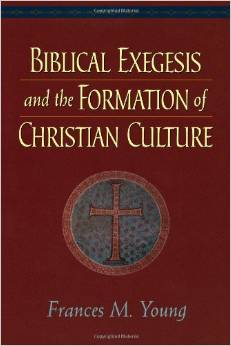
What follows is a brief presentation of the argument of Frances M. Young, Biblical Exegesis and the Formation of Christian Culture (Cambridge: CUP, 1997). While not all scholars agree with Young’s perspective, I’ve found it particularly helpful for thinking about these issues, and so that’s what I’ve chosen to present here.
Early Christian Mimēsis
For Young, both typology and allegory are part of a larger strategy of reading which Young terms “mimēsis,” or figural representation. Insofar as Christian readers want to enter into the world of the biblical text, this requires some degree of imitation or representation between the figures or events in the text and those in the present (or future) day. After all, if the Bible is read merely on the level of “things that happened in the past,” it ceases to have much applicational value for the believer in the present! Thus, early Christians read the Bible mimetically. As Young writes (209):
“Mimēsis was a key concept in ancient understanding of literature. The performance of epic or drama created a ‘representation’ of life from which the audience learnt. In the ancient Church mimēsis or ‘representation’ was important. It underlay the enactment of the saving events in the sacraments, as well as the ‘exemplary’ use of scripture: great heroes were listed to illustrate a particular virtue, so a character like Job came to embody patience, and Christ’s life and death were set forth as a way to be imitated. […] ‘Mimetic exegesis’ assumes the replay of a drama – an act or plot – and so had a place in forming ethics, lifestyle and liturgy.”
Both typology and allegory were used in mimetic exegesis, serving the broader goal of “forming ethics, lifestyle, and liturgy” (often referred to as paraenesis). The difference, then, lies in the nature of the mimēsis. Young distinguishes between two kinds of mimēsis: iconic and symbolic, and associates these with typology and allegory.
Typology, Young argues, makes use of ikonic mimēsis: that is, “representation (mimēsis) through genuine likeness, an analogy, ‘ikon’ or image” (210). This “requires a mirroring of the supposed deeper meaning in the text taken as a coherent whole” (162). This form of nonliteral reading is generally associated with early Christian exegetes in Antioch.
Allegory, on the other hand, makes use of symbolic mimēsis: that is, representation “by a symbol, something unlike which stands for the reality” (210). This “involves using other words as symbols or tokens, arbitrarily referring to other realities by application of a code, and so destroying the narrative, or surface, coherence of the text” (162). This form of nonliteral reading is generally associated with early Christian exegetes in Alexandria (including, most famously, Origen).
In other words, whereas allegory sees an overall coherence in the deeper meanings behind the biblical text, typology insists on the coherence of the text or narrative itself. The question to be asked, therefore, is: Does a given nonliteral interpretation preserve or break the surface-level narrative meaning of the text? This, Young argues, was what was at stake in the debate between Alexandria and Antioch: the Antiochenes criticized the arbitrariness of Alexandrian allegorical interpretation, and instead sought “to find a genuine connection between what the text said and the spiritual meaning discerned through contemplation of the text” (210), which we are here calling “ikonic” mimēsis or typology. Thus, to summarize (212):
“The debate [between Alexandria and Antioch] was about the connections between different exegetical processes, about the coherence of different levels of reading, about the appropriate way of focussing on the text and its ‘mimetic’ relationship to reality. Both Origen and the Antiochenes believed scripture was about heavenly realities, but for Origen scripture was a veil, a shadow, which might obscure as much as reveal; for the reality behind the ‘tokens’ was not self-evident. The Antiochenes found this arbitrary and insisted on attending to what we might call the internal clues to the way the text or narrative ‘mirrored’ the truth. Both presupposed that every literary text clothed the ‘mind’ in its ‘wording’, and the issue was how the two related to one another.”
An Example of Typology
Melito of Sardis’ Peri Pascha (“On the Passover”) is a second-century homily known for its typological use of Scripture. In the selection below (66–69; trans. Kerux), note the connection Melito makes between Jesus’ atoning death on the cross and the story of the Passover in Exodus:
When this one came from heaven to earth for the sake of the one who suffers, and had clothed himself with that very one through the womb of a virgin, and having come forth as man, he accepted the sufferings of the sufferer through his body which was capable of suffering. And he destroyed those human sufferings by his spirit which was incapable of dying. He killed death which had put man to death.
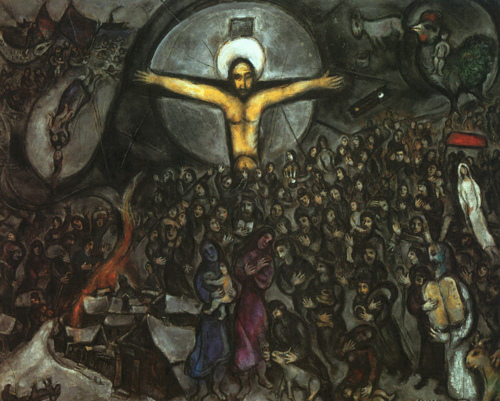 For this one, who was led away as a lamb, and who was sacrificed as a sheep, by himself delivered us from servitude to the world as from the land of Egypt, and released us from bondage to the devil as from the hand of Pharaoh, and sealed our souls by his own spirit and the members of our bodies by his own blood.
This is the one who covered death with shame and who plunged the devil into mourning as Moses did Pharaoh. This is the one who smote lawlessness and deprived injustice of its offspring, as Moses deprived Egypt. This is the one who delivered us from slavery into freedom, from darkness into light, from death into life, from tyranny into an eternal kingdom, and who made us a new priesthood, and a special people forever.
This one is the passover of our salvation. This is the one who patiently endured many things in many people: This is the one who was murdered in Abel, and bound as a sacrifice in Isaac, and exiled in Jacob, and sold in Joseph, and exposed in Moses, and sacrificed in the lamb, and hunted down in David, and dishonored in the prophets.
Melito, therefore, clearly sees the Paschal lamb as a “type” of Christ, and finds other connections between Christ’s suffering and people or events in the Old Testament. As Young points out (193-96), this is an example of “iconic mimēsis,” as Melito’s homily does not in any way disrupt the actual narrative of the Exodus account. Instead, the language of the Exodus is used to illuminate and give depth and significance to our understanding of the crucifixion. Passover, in Melito’s interpretation, points forward to, prefigures, and mirrors Jesus’ death, which we might, therefore, speak of as a “Paschal mystery.”
Here it’s worth noting that, in Young’s opinion, the traditional scholarly take on typology, namely that it is “historical” while allegory is not, is wrong. Using this text as an example, she notes, “The historicity of the event behind the text is not at issue for Melito—in fact, Melito graphically retells the story according to rhetorical conventions, allusion and quotation ‘mimicking’ the scriptural narrative by creatively reminting it” (194); in other words, “the ‘reality’ lies in the fulfilment [of scripture], not in an event whose occurrence in the past is its principal feature” (195). Typology in this sense, then, is essentially prophetic, with emphasis on the event’s mimetic fulfillment.
An Example of Allegory
In contrast, look at how the Epistle of Barnabas, an anti-Jewish polemic dating from the late first or early second century, uses the Old Testament. With respect to the commands of the Mosaic Law which prohibited the people of Israel from eating certain animals, Ps.-Barnabas says the following (Barn. 10.1-9; trans. Holmes):
Now when Moses said, “You shall not eat a pig, or an eagle or a hawk or a crow, or any fish that has no scales,” he received, according to the correct understanding, three precepts.
Furthermore, he says to them in Deuteronomy, “I will set forth as a covenant to this people my righteous requirements.” Therefore it is not God’s commandment that they should not eat; rather Moses spoke spiritually.
Accordingly he mentioned the pig for this reason: you must not associate, he means, with such people, who are like pigs. That is, when they are well off, they forget the Lord, but when they are in need, they acknowledge the Lord, just as the pig ignores its owner when it is feeding, but when it is hungry it starts to squeal and falls silent only after being fed again.
“Neither shall you eat the eagle or the hawk or the kite or the crow.” You must not, he means, associate with or even resemble such people, who do not know how to provide food for themselves by labor and sweat but lawlessly plunder other people’s property; indeed, though they walk about with the appearance of innocence, they are carefully watching and looking around for someone to rob in their greed, just as these birds alone do not provide food for themselves but sit idle and look for ways to eat the flesh of others—they are nothing more than pests in their wickedness.
“And you shall not eat,” he says, “sea eel or octopus or cuttlefish.” You must not, he means, even resemble such people, who are utterly wicked and are already condemned to death, just as these fish alone are cursed and swim in the depths, not swimming about like the rest but living in the mud beneath the depths.
Furthermore, “You shall not eat the hare.” Why? Do not become, he means, one who corrupts children, or even resemble such people, because the hare grows another opening every year, and thus has as many orifices as it is years old.
Again, “Neither shall you eat the hyena.” Do not become, he means, an adulterer or a seducer, or even resemble such people. Why? Because this animal changes its nature from year to year, and becomes male one time and female another.
But he also hated the weasel, and with good reason. Do not become, he means, like those men who, we hear, with immoral intent do things with the mouth that are forbidden, and do not associate with those immoral women who do things with the mouth that are forbidden. For this animal conceives through its mouth.
Concerning food, then, Moses received three precepts to this effect and spoke in a spiritual sense, but because of their fleshly desires the people accepted them as though they referred to actual food.
For Ps.-Barnabas, the Jews misunderstood the dietary laws: they were never about refraining from certain foods; instead, they were really about certain kinds of people whom one should avoid. This clearly falls under Young’s category of “symbolic mimēsis,” as the words of the text (viz., the different animals) are in fact symbols speaking of something entirely different (viz., different people). The narrative or surface meaning of the text—that the Jews were not to eat certain foods—has been destroyed, replaced with an entirely meaning. This kind of extreme allegory (see, for instance, the example of the hare above) was criticized, by both the Antiochenes as well as many today, as being arbitrary. But you can see the appeal to Ps.-Barnabas of making this move (which he inherited from the Jewish exegete Philo): on the Christian assumption that the Mosaic food laws are no longer binding in this dispensation, in what sense can these verses of Scripture be thought of as “useful” and “profitable” for teaching or discipleship? Nevertheless, later Christian tradition, even among later Christian allegorists, did not follow Ps.-Barnabas in this particular line of interpretation. So much for the sex-changing hyenas!
An Example with Shades of Both Typology and Allegory
Finally, we’ll consider Gregory of Nyssa’s Life of Moses, a text dating from the late fourth century. In this text, Gregory presents Moses as a paradigmatic Christian, with various elements in Moses’ life serving as models for how the virtuous Christian should live. For example, with respect to the scene in which Moses kills an Egyptian and flees to Midian (Exod 2:11-21), Gregory comments (Life of Moses 15–18; trans. Malherbe & Ferguson):
Moses teaches us by his own example to take our stand with virtue as with a kinsman and to kill virtue’s adversary. The victory of true religion is the death and destruction of idolatry. So also injustice is killed by righteousness and arrogance is slain by humility.
The dispute of the two Israelites with each other occurs also in us. There would be no occasion for wicked, heretical opinions to arise unless erroneous reasonings withstood the truth. If, therefore, we by ourselves are too weak to give the victory to what is righteous, since the bad is stronger in its attacks and rejects the rule of truth, we must flee as quickly as possible (in accordance with the historical example) from the conflict to the greater and higher teaching of the mysteries.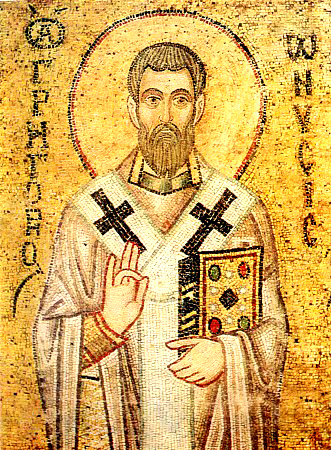
And if we must again live with a foreigner, that is to say, if need requires us to associate with profane wisdom, let us with determination scatter the wicked shepherds from their unjust use of the wells—which means let us reprove the teachers of evil for their wicked use of instruction.
In the same way we shall live a solitary life, no longer entangled with adversaries or mediating between them, but we shall live among those of like disposition and mind who are fed by us while all the movements of our soul are shepherded, like sheep, by the will of guiding reason.
What do we make of a text like this? Clearly, it is a figurative, mimetic reading of this account in Moses’ life, but would we categorize it as typology or allegory? For here, “the allegorical element is undeniable, interwoven with the kind of figurality which often goes by the name typology” (Young, 259). Here the labels cease to be effective descriptions of what is going on. Though she labels this “essentially paraenetic” form of interpretation (that is, “its purpose was to provide patterns on which people could model their lives”; 263), it is clear that both typology and allegory are here “woven together in developing a figural reading which can map the journey which constitutes the life of faith” (264). Here, in conclusion, we have a reminder that, while our modern labels of “typology” and “allegory” may be helpful to some extent as terms for helping us understand how the Antiochenes conceived of “good” and “bad” figural interpretation, we must be careful not to be dogmatic in our application of them.




 Kyle R. Hughes
“Children in Paradise”: Gregory of Nazianzus on Gen 2-3
[Adam] was placed in paradise, whatever that paradise was then, honored with self-determination so that the good would belong to the one who chose it no less than to the one who provided its seeds.
In other words, it was necessary for God to create humans with free will, that they might themselves be sources of good (perhaps this is part of what it means to be created in the imago Dei). But the tree of knowledge was not meant to always be a mere test:
God gave [Adam] a law as material on which his self-determination could work, and the law was a commandment indicating which plants he could possess and which one he was not to touch. And that was the tree of knowledge, which was neither planted from the beginning through envy—let the enemies of God not wag their tongues in that direction, nor imitate the serpent—but would be good if possessed at the right time. For the tree is contemplation, according to my own contemplation, which is only safe for those of mature disposition to undertake; but it is not good for those who are still simpler and those greedy in their desire, just as adult food is not useful for those who are tender and still in need of milk.
Note how, for Nazianzen, the garden is not simply a really nice arboretum but a symbol of thinking God’s own thoughts (two ideas linked by their common use of the word “cultivation”). But whereas contemplation of the divine is reserved for those who are spiritually adults, Adam and Eve were merely “children in paradise.” The tree of knowledge could have been theirs, had they just waited until they grew up.
As N. V. Harrison summarizes (Festal Orations, p. 50), “God’s plan was to educate their freedom by letting them practice not eating from the tree of knowledge. In this way, they would have grown to adulthood and been prepared to eat from it, just as an ascetic grows through the practice of the virtues and resistance to temptations, so as to be ready for the contemplation for which humankind was indeed created. Adam and Eve’s sin was grasping at contemplation too soon, like a young, overly zealous monk who, like them, is headed for a fall.”
I wonder, though: in our day and age, are we not so much overly zealous in our desire for divine contemplation as we are dismissive of our very ability to do so? Perhaps we need to spend some time cultivating the garden.