5 Classes You Must Take at DTS

What’s a blog without an idiosyncratic count-down list? Oh well. Bearing in mind this is just one person’s perspective, I hope it will help someone with their future course selections. Good dollars deserve good teaching, and good teaching deserves good enrollment!

5. The Gospel of John (NT325, Hall Harris III)

This NT elective, as the title suggests, focuses on the exegesis of the Fourth Gospel. Dr Harris is the school’s Johannine scholar, and his attention to the Evangelist’s narrative technique and theology provides a great deal of food for thought. Plus every class begins with a beautiful picture of German castles and mountains!

4. The Apostolic Fathers (HT217; Michael Svigel)

As I’ve said before, it’s mind-blowing that we try and interpret or exegete the NT without reference to other Christian documents contemporaneous with or immediately subsequent to the writings of the NT. Dr Svigel is a great guide as you read through the entire AF corpus, plus a few short books summarizing issues related to these fascinating texts. A bonus lecture on the “Quest for the Historical Santa” was also quite memorable.

3. Historical Jesus (NT407; Darrell Bock)

This class focuses on reading and critically evaluating N. T. Wright’s Jesus and the Victory of God and J. D. G. Dunn’s Jesus Remembered. One of the few classes conducted as a true seminar, there’s lots of room for discussion and disagreement. And did I mention it meets at the professor’s home? Just the setting alone makes the class worthwhile!

2. Cross-Cultural Theological Education (WM410; Steve Strauss)

This is probably the most practical class I have taken at DTS. Dr Strauss has decades of experience to share, and the final project (actually creating an educational plan for a given cross-cultural context) is actually quite a bit of fun. There’s also lots of advice on what it means to be a good teacher/educator in general; in other words, there’s a lot to profit from!

1. New Testament Textual Criticism (NT215; Dan Wallace)

Any of Dr Wallace’s classes is a “must-take,” but his NTTC class is his wheel-house. I have no doubt that many of the anecdotes he shares from his various travels for the Center for the Study of New Testament Manuscripts (CSNTM) are things you’d learn nowhere else. You also get first-hand practice collating a manuscript. It’s difficult, sometimes tedious work, but strangely rewarding. And while 2,000 pages of reading is daunting, by the end of the class I felt better qualified on issues of NTTC than pretty much any sub-field of NT studies.
Posted in Seminary | Tagged , | 1 Comment

Are You God’s Money?

dataAnd have you wandered away from the treasury? Those are the questions Augustine wants us to think about in his reflections on Mark 12:13-17.

Mark 12:13-17 and parallels record a controversy between Jesus and the Pharisees and Herodians, in which Jesus’ opponents ask Jesus whether or not it is right to pay the poll tax to Caesar. Jesus asks for them to produce a coin, which has Caesar’s icon/portrait on it, and makes the famous statement to “Give to Caesar what is Caesar’s, and to God what is God’s.” But what exactly does this mean? What is Jesus really getting at besides giving a witty comeback to his challengers?

With a tip of the hat to Kuruvilla (Mark, 269), there is some very interesting patristic commentary on this episode. Augustine picked up on the use of the word εἰκών (“icon”) in Jesus’ question about whose “icon” is on the coin and connects this with mankind being made as the “icon” of God (Gen 1:26 LXX, usually rendered “image” of God in translation, the imago Dei). Writes Augustine:

The image of the Emperor appears differently in his son and in a piece of coin. The coin has no knowledge of its bearing the image of the prince. But you are the coin of God, and so far highly superior, as possessing mind and even life, so as to know the One whose image you bear” (Sermons on New Testament Lessons 43).

We are God’s money. But we are like coins that have wandered away from the treasury. What was once stamped upon us has been worn down by our wandering. The One who restamps his image upon us is the One who first formed us. He himself seeks his own coin, as Caesar sought his coin. It is in this sense he says, “Render to Caesar the things that are Caesar’s, and to God the things that are God’s,” to Caesar his coins, to God your very selves” (Tract. Ev. Jo. 40.9).

As people would say around here, that will preach!

Posted in Patristic Commentary | Tagged , , | Leave a comment

The (Continued) Scandal of the Evangelical Mind

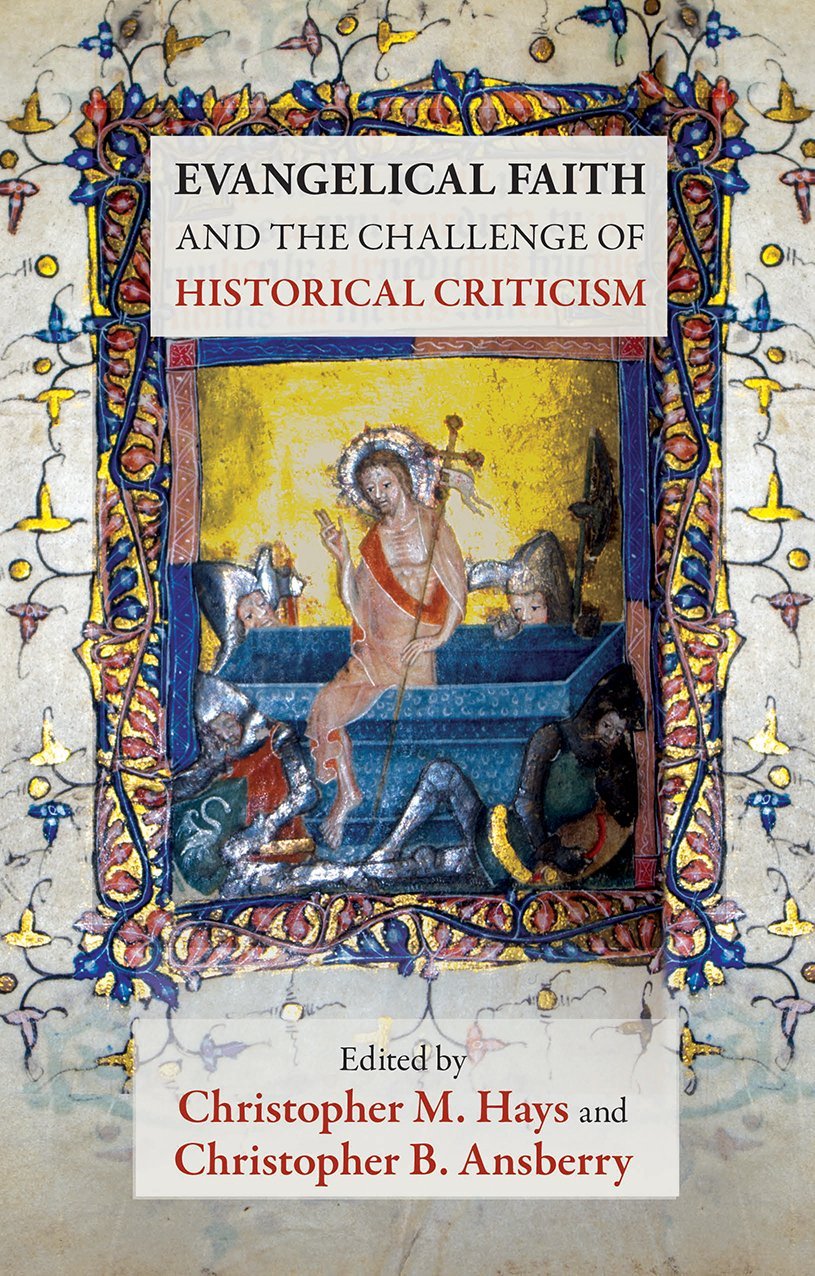
The scandal of the evangelical mind, as an influential book by Mark Noll pointed out, is that “there is not much of one.” Noll indeed 81a6eUyOqGL._SL1276_got at a very real issue: many evangelicals (including famous pastors and influential seminary professors and leaders) do bury their heads in the sand when it comes to engaging important critical issues. Recent well-publicized cases of Christian faculty being dismissed from evangelical schools following questionable charges of heterodoxy have, embarrassingly, only further underscored the point.

All that to say: I’m happy to see a new voice entering the discussion in the form of a new book edited by Christopher Ansberry (Wheaton) and Christopher Hays (Keble College, Oxford). Evangelical Faith and the Challenge of Historical Criticism (SPCK, May 2013) looks to be just the kind of treatise that I would want to contribute to. Hays had this to say in a recent interview posted online:

When I started writing the book, I was angry, angry at an evangelicalism that (I felt) had sold me a reductionist bill of goods; I felt that that fundamentalism had imperilled my faith by only introducing me to a critical straw man, and by telling me that if criticism were true, then my faith would fall apart. So the book started out with a scathing, perhaps figuratively ‘patricidal’ tone. But after I while I realized that precisely this sort of hostile tone was creating a schism in the evangelical community, as more and more evangelicals were getting burned and turning bitter voices into hostile articles and blogs. In this sort of vengeful response, the conservatives were simply being pushed further away from a sober (and I trust more profitable) view of historical-critical engagement with Scripture. So I had to go through a process of repentance for my own anger, insecurity, and wrath. Then I rewrote everything I had done, from a perspective of fraternity and charity (I hope), and I think the book is a great deal better for it.

I can certainly relate to the feeling of having the arguments of critical scholarship mocked as “straw men,” as if one powerpoint slide could dismiss an entire scholarly movement. Too often, I’ve seen a total unwillingness to go wherever the evidence leads in favor of clutching on to untenable (and, I truly believe, unnecessary) bibliological or theological presuppositions. No wonder that many, like Hays, conclude that their evangelical educations have sold them “a reductionist bill of goods.” This conclusion is nothing unique, but Hays’ emphasis on approaching his criticism from a perspective of “fraternity and charity” is most welcome. According to the Amazon description, the book promises “essays on eight of the most provocative topics of critical investigation: the Fall, the Exodus, the Conquest, the Covenant as a Post-Exilic Phenomenon, Pseudepigraphy, Prophecy, the Historical Jesus, and the Paul of Acts versus the Paul of the Epistles.” Kudos to Team Christopher for putting forward a positive model of engagement with critical scholarship, and I look forward to picking up my copy of their book when it is released later this spring.

Posted in Evangelicalism | Tagged , , , | 1 Comment

More Mumford: “Babel”

14234880_120813183000In honor of Mumford & Sons winning the Grammy for “Best Album” last night for Babel (2012), I thought it might be worthwhile to consider the biblical allusions in the title track “Babel.”

Babel is, in our English Bibles, the name for a tower built at a place with that name (it appears to derive from the Hebrew “confused,” though it is also the Semitic word for the nation/empire of Babylon). In the biblical story (Genesis 11:1-9), mankind has defied God’s command to multiply and spread throughout the earth; instead, they settle at one location and attempt to build “a tower that reaches to the heavens, so that we may make a name for ourselves and not be scattered over the face of the earth” (11:4). But Yahweh God “comes down” (11:5), sees the tower, and confuses the language of the men so that his plan for humanity to spread across the earth might be fulfilled (11:8-9).

The Wirkungsgeschichte of the Tower of Babel story has emphasized the pride of man, humanity’s striving to be like God and approach him on our own terms. This theme is most likely what Marcus Mumford is alluding to in “Babel.” I take it that the opening verses and especially the chorus (below) describe the folly of human pride:

Like the city that nurtured my greed and my pride
I stretch my arms into the sky
I cry, Babel, Babel look at me now
Through the walls of my town, they come crumbling down

The problem (and thus the lie to all forms of human pride), Mumford seems to argue, is that mankind is transient, weak, and powerless:

You ask where will we stand in the winds that will howl
As all we see will slip into the cloud
So come down from your mountain and stand where we’ve been
You know our breath is weak and our body thin

There also seems to pose a problem on God’s side – how can an eternal, powerful God ever relate to such beings? “Come down from your mountain” is a clear allusion to the theme of “your [Yahweh’s] mountain,” namely, Mount Sinai, where God gave the Law to Moses. Whether Mumford had this in mind or not, Christian theology suggests that God did indeed come down from his mountain, taking on the flesh of humanity with all of its suffering and brokenness (cf. Phil 2:1-10). Indeed, what matters is not human effort or pride (the “upward” effort of human religion and achievement) but God’s grace (the “downward” undeserved gift of God). Thus:

Cause I know my weakness know my voice
And I’ll believe in grace and choice

As always, these are just my thoughts on this song, and there are surely other layers of meaning at work, but the biblical allusions are nevertheless central to “Babel,” no matter how you understand it. Here’s an unofficial link to the song.

Finally, if you haven’t already done so, consider hitting the “follow” button to the right to receive new posts by e-mail. Updates on Ph.D. apps to follow shortly!!

Posted in Wirkungsgeschichte | Tagged , , , | Leave a comment

Should Christians Sell Everything?

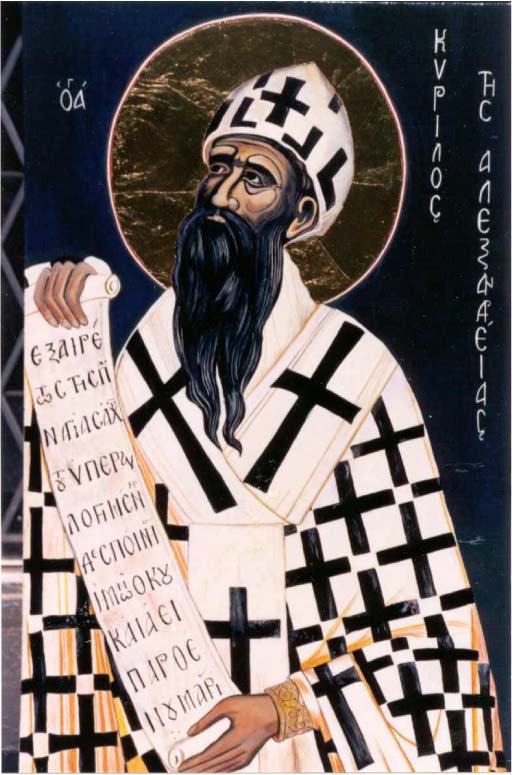
Saint-clement-of-alexandriaSome popular-level Christian writers have recently argued that modern-day Christians should emulate the early church in selling all of their possessions and giving to the poor. This is based in part on their interpretation of the description of the nascent Christian community in Jerusalem (Acts 2:42-47) and in part on Jesus’ instructions to the rich young ruler to sell everything and follow him (Mark 10:17-27 and pars.; note that in no one Gospel is the man ever described as rich and young and a ruler — we only get this description by combining the descriptions across the Synoptic accounts).

Clement of Alexandria (150-215), in his Quis Diver Salvetur (“Who is the Rich Man that May be Saved?”), offers the following insight into the matter:

For if no one had anything, what room would be left among men for giving? And how can this dogma fail to be found plainly opposed to and conflicting with many other excellent teachings of the Lord? “Make to yourselves friends of the mammon of unrighteousness, that when ye fail, they may receive you into the everlasting habitations.” “Acquire treasures in heaven, where neither moth nor rust destroys, nor thieves break through.” How could one give food to the hungry, and drink to the thirsty, clothe the naked, and shelter the houseless, for not doing which He threatens with fire and the outer darkness, if each man first divested himself of all these things? Nay, He bids Zaccheus and Matthew, the rich tax-gathers, entertain Him hospitably. And He does not bid them part with their property, but, applying the just and removing the unjust judgment, He subjoins, “To-day salvation has come to this house, forasmuch as he also is a son of Abraham.” He so praises the use of property as to enjoin, along with this addition, the giving a share of it, to give drink to the thirsty, bread to the hungry, to take the houseless in, and clothe the naked. But if it is not possible to supply those needs without substance, and He bids people abandon their substance, what else would the Lord be doing than exhorting to give and not to give the same things, to feed and not to feed, to take in and to shut out, to share and not to share? Which were the most irrational of all things. (Quis. Div. 13)

Clement goes on to insist that it is not the presence or absence of wealth that is the matter, so much as it is the heart condition towards money that God is most concerned with. So, on the one hand, Jesus is not making a “literal” command to sell everything (nor did the early church actually do this, as a close reading of Acts makes evident). But, on the other hand, this is hardly an endorsement of the American dream: Jesus calls for sacrificial, significant, intentional giving to those in need. If only Christians were known first and foremost for this quality in our day…

Posted in Patristic Commentary | Tagged , , | Leave a comment

Making Peace with the Bible

Ever been concerned about inconsistencies or discrepancies in the Bible? I’ve recently come across a memorable quotation from Cyril of Alexandria (c. 376-444). Interesting how he connects the ethic ofSt Cyril of Alexandria the Sermon on the Mount to the hermeneutics of biblical interpretation:

“The peacemaker is one who demonstrates to others the symphony of the apparent conflict between the Scriptures, as between the Old and the New, the legal and the prophetic, or between the Gospels. For this, as one who imitates the Son of God, he will receive a spirit of adoption and be called a son of God” (Comm. Matt. frag. 38, on Matt 5:9).

I have found that people tend to approach the Bible with either an attitude of complete skepticism or uncritical naïveté. Much better, methinks, is an approach that recognizes that tensions and problems do exist, but that seeks to give the texts some benefit of the doubt before dismissing problematic differences as irreconcilable.

Posted in Patristic Commentary | Tagged , , | Leave a comment

Wirkungsgeschichte (3): Mumford & Sons!

One of my favorite bands is Mumford & Sons, the English folk rockers whose new album Babel (2012) has recently set sales records here in the US. As is well known, Mumford’s lyrics are filled with biblical allusions – nearly every song has some kind of reference to biblical images or stories, often to the book of Genesis. Mumford’s songs are thus a contemporary example of Wirkungsgeschichte, the continuing “history of effects” of the biblical text millennia after its writing.

220px-MumfordsonssighnomoreMumford’s music has come to mind this week as I’ve been preparing a sermon on the parable of the seeds/soils (Mark 4:1-20 pars). Listening to Sigh No More (2009) in my car, I was struck by the lyrics of “Thistle & Weeds.” While the “meaning” of the song is undoubtedly polyvalent, I do think there are clear allusions to this parable. The chorus to this song begins, “But plant your hope with good seeds / Don’t cover yourself with thistle and weeds.” This sure sounds like the seed falling among the thorns (Mark 4:7). This connection is strengthened with the line “Corrupted by the simple sniff of riches blown,” which parallels the interpretation of the parable, which states that the seed that falls among the thorns are those who hear the word of God but fall away because of the “seductiveness of wealth” (Mark 4:19). That Marcus Mumford was drawing on the Gospels for at least one line of this song is nearly certain on account of the direct quotation of “Let the dead bury their dead” (Matt 8:22), so I think this allusion to another dominical saying is reasonable.

Here’s a link to the song so you can judge for yourself. Enjoy!

Posted in Wirkungsgeschichte | Tagged , , | Leave a comment

Evaluating N. T. Wright

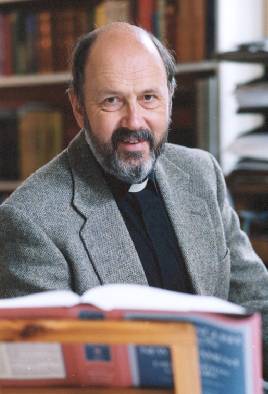
tomwright2My master’s thesis, “History and the Victory of God: The Contribution of N. T. Wright to the Study of the Historical Jesus,” is finished. Over the course of the last year I’ve spent working on this, I’ve gotten to dig deeper in areas as diverse as epistemology (Lonergan, MacIntyre), hermeneutics (Thiselton, Osborne), historiography (Collingwood, Meyer, Sheppard), and the role of theological interpretation in historical investigation (Bockmuehl, Treier, Green).

While I learned a lot on the way, part of me does wish I had pursued an “original” line of inquiry as opposed to the “summary of research” model I was advised to follow. Granted, when I started this thesis, I had not even begun my NovT article, which I think could have been expanded into a master’s thesis fairly easily. Perhaps the best way to view this exercise was that it helped instill in me an appreciation for good historical method and the limits of various approaches to studying Jesus and the first century.

I’ve posted a pdf of my thesis on the “academic archives” page. Here’s the abstract:

N. T. Wright’s Christian Origins and the Question of God series is a landmark in New Testament scholarship not only for the ambitious scope and comprehensive nature of its inquiry but also its thorough articulation of historical method. The purpose of this thesis is to summarize and evaluate N. T. Wright’s influential historical method for studying the historical Jesus. Chapter 1 introduces the need for and approach of this study, suggesting that Wright’s holistic historical method offers a means of breaking the impasse of current historical Jesus scholarship. Chapter 2 analyzes the elements of Wright’s historical method, demonstrating that Wright uses a story-based critical realism to integrate the study of history with the study of literature and theology. Chapter 3 evaluates Wright’s method, examining three major objections that critics have raised in response to the historical method presented in the first volumes of Wright’s Christian Origins series. Specifically, the issues of holism and narrativity, the relative valuation of the sources, and the role of theology will be discussed, with the goal of surfacing ways in which Wright’s historical method can be improved. Proposed improvements, summarized at the end of chapter 3, include limiting the scope of the hypothesis, proceeding from the narrative context of the data, accounting for the transmission process, and utilizing the church’s theological heritage. Yet perhaps the real significance of Wright’s laudatory, if imperfect, historical method is that it raises questions of historiography to the center of the discussion in historical Jesus studies where they belong.

Posted in Uncategorized | Tagged , , | Leave a comment

In Layman’s Terms: Wirkungsgeschichte (2)

imagesThe interpretation of the millennium in the Apocalypse of John (Rev 20) has been contested throughout church history. Background and exegetical study of the text is indecisive; there really is no such thing as “the Bible says” on this one. So we have at least three options (pre-millennialism, amillennialism, post-millennialism) for interpreting this passage that are exegetically viable. Here is where a study of the fore-ground of the text, its earliest reception history or Wirkungsgeschichte, can illuminate our understanding of the passage.

Papias (60s?-155?) authored the five-volume Exposition of the Sayings of the Lord, of which we have only fragments preserved in other writings. According to Irenaeus (Adv. Haer. 5.33.4; late 2nd c.), Papias was a “hearer” of the apostle John and a companion of Polycarp, perhaps the most famous of John’s disciples. Assuming this is accurate, this means that Papias had direct access to John’s teaching, and he might be uniquely qualified to comment on John’s teaching. Concerning the millennium of Revelation 20, then, we are told (by Eusebius, H. E. 3.39.12) this about Papias: “Among other things he says that there will be a period of a thousand years after the resurrection of the dead when the kingdom of Christ will be set up in material form on this earth.” Eusebius, an amillennialist, thought Papias an idiot in this regard, reflecting the ascendancy of amillennialism in especially the third century. Be that as it may, here we have strong evidence that Papias, a “hearer” of John, interpreted Revelation 20 in a pre-millennial fashion.

Justin Martyr (100-165?) might also be linked with the apostle John. His Dialogue with Trypho is presented as having taken place in Ephesus, where tradition holds that John lived out his days well into the 90s. This means it is very possible that Justin had access to the living memory of John through those who were students and disciples of the apostle. Appealing to John’s memory, Justin writes, “But I and others, who are right-minded Christians on all points, are assured that there will be a resurrection of the dead, and a thousand years in Jerusalem…” (Dial. Tryp. 80). Another link to John, another pre-millennial interpretation.

The Didache, Epistle of Barnabas, and Irenaeus of Lyons also offer potential early support for the dominance of pre-millennial interpretation in early Christianity. Yet it is this evidence, resulting from access to the living memory of the apostle John, that I find very interesting. Of course, it is possible that the traditions are wrong or there’s some grand conspiracy at work, but Occam’s Razor suggests otherwise. This apostolic memory is not an infallible guide for interpretation, but I suggest it should count as significant evidence.

Posted in Wirkungsgeschichte | Tagged , , , , , | Leave a comment

In Layman’s Terms: Wirkungsgeschichte (1)

Yes, it’s German, but what is is? It’s an idea worth being familiar with because some biblical scholars believe that the study of Wirkungsgeschichte is the future of NT studies. At the least, increased attention to Wirkungsgeschichte has significant potential for the way we read and understand the Bible.

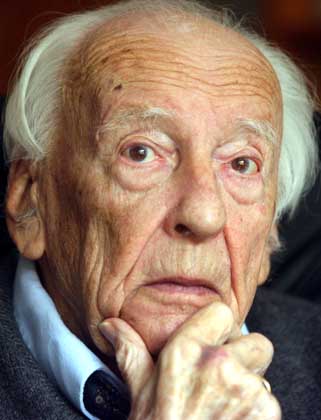
Recent conventional wisdom held that there was an “empty gap” between the world of the text and the world of today (in Bible study and preaching this is often alluded to in the phrase “bridging the gap”). The German philosopher Hans-Georg Gadamer, in his Truth and Method (1960), rejected this view and instead argued the gap is not empty but full of centuries of interpretation and history that color any attempts at interpretation today.Hans-Georg Gadamer

We normally stress going “behind” the text to study the cultural, historical, and linguistic background that helps us understand it. Gadamer suggests that it is just as important to go “in front” of the text to study the text’s history of interpretation and performance. This “effectual history” (Wirkungsgeschichte) of a text thus emphasizes how intervening tradition colors any attempts to interpret a text today. As Markus Bockmuehl (Seeing the Word, 65) summarizes, “The meaning of a text is in practice deeply intertwined with its own tradition of hearing and heeding, interpretation and performance.” Thus, Gadamer focused on how the historical impact of a text, its “past,” colors our reading of it in the present. Strictly speaking, the reception history of a text, its “history of interpretation” (Auslegungsgeschichte), is not strictly the same as Wirkungsgeschichte, which focuses more on the history of the influence of the text, but for convenience sake I will follow most NT scholars in including the reception history of a text as part of the text’s Wirkungsgeschichte.

This has important ramifications for NT study. Again, Bockmuehl (65): “New Testament studies on this view could find a focus in the study of the New Testament as not just a historical but also a historic document. Its place in history clearly comprises not just an original setting but a history of lived responses to the historical and eternal realities to which it testifies.” The Swiss scholar Ulrich Luz, in his commentary on Matthew (Eng. trans., Hermeneia, 2007), depicts interpreters in this model as those who are “like people who have to examine the water of a stream while they are sitting in a boat that is carried along by that very stream” (63). So much for scientific objectivity, in which the interpreter is a scientist looking at a static text under a microscope.

Studying the reception of biblical texts has value in its own right, and so-called “encyclopedias of reception” are extremely helpful for understanding how various Church Fathers understood and applied the Scriptures. Entire commentary series are being written with a focus on reception history, including the Blackwell Bible Commentaries and The Church’s Bible series. Journal articles and monographs looking at the reception of individual books of the Bible or even individual verses are proliferating. Yet, as I will detail next time, Wirkungsgeschichte, particularly that of the first two centuries of the Christian era, holds out further promise for our actual understanding of the biblical text.

Posted in Wirkungsgeschichte | Tagged , , , | 4 Comments