N. T. Wright on the “New Marcionism”

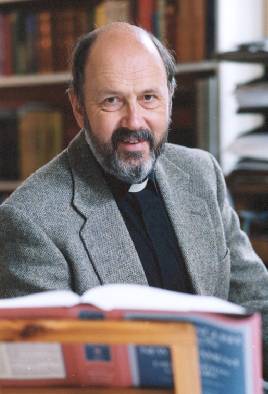
tomwright2Courtesy of a tip from Doug Kortyna, here’s a link to an excellent interview with the good bishop on the issue of the seeming discontinuity between the “loving” Jesus of the NT and the “wrathful” God of the OT.

Marcion was a second-century bishop branded a heretic for his belief that the Yahweh of the OT was an evil demiurge, inferior and altogether different from the God revealed in the NT. Marcion was denounced and excommunicated for his beliefs, but this general idea nevertheless continues to surface throughout church history, and even within conservative-evangelical circles today (hence, the “new Marcionism”).

Note the link to download the entire interview (touching on the historical Adam, among other things) at the bottom of the page. On the issue of divine justice and authority more broadly (from a philosophical perspective), let me recommend the work of my favorite Georgetown professor: Mark C. Murphy, An Essay on Divine Authority, Cornell Studies in the Philosophy of Religion (Cornell Univ. Press, 2002).

Posted in Uncategorized | Tagged , , , | 2 Comments

Simon Peter (1): Bockmuehl’s Method

9781441239600As I’m a big fan of Oxford scholar Markus Bockmuehl, I’m excited to begin a three-part summary/review of his new book Simon Peter in Scripture and Memory: The New Testament in the Early Church (Baker Academic, 2012). Bockmuehl’s Seeing the Word was one of the most formative books I read during my seminary years, and so I was all the more excited that he billed this work on Peter as a “test case” for the approach to living memory that he set out in Seeing the Word.

It is precisely this theory of living memory that Bockmuehl expounds in the first part of his book on Peter. First, though, he sets out the problem that makes Peter an ideal test case: although Peter was the leading disciple of Jesus and the point of continuity between the ministry of Jesus and the apostolic church, we in actuality know very little about him by way of details of his biography or apostolic career. Peter virtually disappears from Acts after 12:18, and nowhere else in the NT do we get clues as to his fate. Very few, if any, of the many gospels, acts, and epistles attributed to Peter are considered authentic to the apostle (1 Peter, and to a less likely extent, 2 Peter, are the best candidates for exceptions, but even if one or both are accepted as Petrine, they still shed very little light on Peter the man).

If, therefore, we have “no significant written sources extant from [Peter’s] lifetime” (5), what are we to do? Here’s where Bockmuehl’s “living memory” comes in. By this approach, which he contrasts with an “archaeological” model of finding real history buried beneath centuries of church tradition, Bockmuehl means “understanding what happened from what happened next” (8). That is, following Gadamer’s theory of Wirkungsgeschichte, “studying the impact and aftermath of historical persons, texts, and events, either for their own sake or, somewhat less commonly, as a potential clue to the original meanings” (8), provides a better way at getting at historical reality through the use of historical foregrounds rather than endless attempts at getting “behind” the text as in the archaeological model.

Bockmuehl’s unique twist on Wirkungsgeschichte is his emphasis on what he calls “living memory.” Scholars tend to assume that the earliest sources are best, but Bockmuehl turns this assumption on its head. Here he is worth quoting at length (10-11):

“Contemporary observers often turn out to be pretty poor witnesses to the history of their own times. What they perceive as successes may well turn out in retrospect to be little short of disastrous; people they damned as failures can in the end be celebrated for far-sighted courage and wisdom–and vice versa. [Example of changing fortunes of Chamberlain and Churchill before, during, and after WWII] 

In seeking to understand key players in the drama of Christian origins, therefore, we may not always be best served if we imagine contemporary written sources to be the best points of access. The quality of historical insight is not always proportionate to proximity of our sources to the events and persons they describe. Although a privilege when we can get them, the voices of ancient contemporaries are no less myopic about their own times than we are about ours: proximity typically precludes perspective.

Conversely, the experienced and remembered effects of a person’s words and actions are valuable as a clue to their meaning as a knowledge of the original causes and circumstances. At the same time, it must be right to limit the extent to which we travel down the road of consequences, or we will lose sight completely of the original story.”

Bockmuehl “limits the extent” of his journey to about AD 200, when those who heard first-hand from those who heard the apostles first-hand were dying off, breaking the chain of “living personal memory of the apostolic tradition” (16). While conceding that all memory is “at least to some extent, a reflection on itself and on its own ideological commitments” and that it “is remarkably malleable and subject to distortion when it comes to the witness’s own experiences and encounters” (11), Bockmuehl argues that “we should not be misled into the opposite error of underrating memory’s importance just because it is contested and tenuous” (12). All the more so, he argues, for early Christians who explicitly safeguarded and treasured apostolic memory (e.g., Papias in Eusebius E. H. 3.39.3-4; Irenaeus in Eusebius E. H. 5.20.7; Clement of Alexandria in Eusebius E. H. 3.23.5).

I have a minor interest in memory studies, and of all I’ve read I think Bockmuehl is one of the best at seeing the strengths, weaknesses, and above all the usefulness of this kind of approach. Particularly given that the NT gives us very little of Peter’s life beyond his identity as Jesus’ leading disciple and a key leader in the early church, a study of “living memory” might indeed show “how this [basic] profile was remembered and augmented, contested and fictionalized, in the 150 years after the events surrounding Peter’s disappearance from the narrative of Acts” (33). To this we turn next time.

Posted in New Testament | Tagged , , , , | 1 Comment

N. T. Wright on Patristic Interpretation

Currently doing a quick read-through of Bishop Tom’s insightful little book Scripture and the Authority of God, and came across this comment on patristic interpretation:

tomwright2What the use of allegory highlights, of course, is the church’s insistence on the importance of continuing to live with scripture, the whole scripture, including the bits which appeared deeply problematic–for instance, some of the more shocking stories in the Old Testament. . . Allegorization, then, represents both an insistence that the church must go on living with and under scripture and a failure, at some levels at least, to understand how scripture itself actually works. . . it looks as though at least some uses of allegory constitute a step away from the Jewish world of the first century within which Jesus and his first followers were at home.

Allegory was in one sense, as is sometimes claimed, a way of ‘saving the Bible for the church,’ in the sense that with the other reading strategies available at the time the less savory passages of the Old Testament might have been jettisoned altogether. . . but allegorical exegesis always ran the risk of conceding a great deal at a more fundamental level by encouraging people to see the Bible in a de-storied and hence de-Judaized way. At this level, allegory was one symptom of a move away from the primacy of the scriptural narrative itself, foreshadowing those attempts in our own day to live under scripture which are in fact an appeal, not to the Bible itself, but to a particular tradition within the life of the church.” (67-8)

I actually quite like this: on the one hand, it recognizes the strength of allegorical interpretation in that it attempts to read the OT in a thoroughly christocentric way for the benefit and usefulness of the church. Surely, this way of reading the OT is to be preferred to the approach of my preaching classes and so much of evangelical Christianity, in which the OT is more or less a collection of quaint ethical stories (NTW: “cozy moral tales”), thus utterly failing to recognize what Scripture really is.

On the other hand, Wright correctly identifies a possible weakness of allegorical interpretation in its tendency to “de-story” and therefore “de-Judaize” the OT. No doubt this was the result of tension between nascent Christianity and ascendant rabbinical Judaism, as early Christians more radically sought to distance themselves from their Jewish heritage. Hence you have people like Marcion, who wanted to throw out the OT altogether as an “inferior” religion, and Ps.-Barnabas, who denied Israel any real place in God’s salvation-history. Even if catholic Christianity rejected these more extreme impulses, the tendency to allegorize may at times more reflect this historical situation than a proper understanding of how the entire scriptural narrative might function as a cohesive whole.

Posted in Patristic Commentary | Tagged , , , | 6 Comments

On Applying for a PhD in New Testament / Christian Origins

Applying for a PhD in the field of NT/Christian Origins is a monster of a task (or at least a significant part-time job!). As I went through this process over the last twelve months, I was helped and encouraged by the words of others who had recently been through the same thing. Probably the most thorough example is Nijay Gupta’s fairly comprehensive write-up here, which you can also buy in book form through his website. While I recommend Gupta’s advice, it is nevertheless just one person’s perspective, and I think the more different opinions you can glean, the better you will be able to make your own decision.

My target audience is also considerably narrower than Nijay’s: I did my graduate work at an “confessional” seminary (Th.M., Dallas Seminary) but wanted to do doctoral work at a “secular” (that is, a public or non-confessional private) university here in the US. If you find yourself in a similar place with similar ambitions, then this post is (particularly, but not exclusively!) for you.

Preliminaries

First, though, a few questions to consider before going any farther:

Are you sure you want to do this? Even with the funding provided by secular schools, finances are almost certainly going to remain tight for the next half decade or beyond. And even if you manage to complete the doctoral program, you’re not guaranteed a job! In fact, the job market in religious studies is quite poor at the moment, and not expected to improve in the near future. To have a chance, you’ll likely not just have to get your doctorate, but do so with great distinction. In other words, know what you’re signing up for and count the cost before taking the plunge! And if you have a spouse, make sure he/she is on board with your decision and is affirming of your passion or call in this regard.

What are your theological non-negotiables? To put it as bluntly as possible: if you swear fealty to the Chicago Statement, if you believe Karl Barth to be a liberal heretic, if Mosaic authorship of the Pentateuch is a hill you would die on, then pursuing a secular PhD is probably not the right fit for you. Notice what I did not say; I very much believe there is room for people of faith in major universities, and do believe that many (if not all) are genuinely open to taking students with faith convictions. But these schools do (rightly) expect critical thinkers who are willing to interact with and respect people bringing different presuppositions to the table. It’s important to, as far as you are able, get a feel for what kind of bibliological presuppositions will and will not fly at the different universities you are considering, and then be honest about where you’re coming from–both for your own sake as well as the university’s.

What methodologies are you most excited about? If you’re passionate about the use of the aorist participle in the pastoral letters, that’s great, but that’s not the kind of topic a secular research institution is going to care much about. If, on the other hand, you’re interested in applying the insights of rhetorical criticism, reception history, social-scientific theories, or Wirkungsgeschichte to the biblical text, then you’re on the right track.

The Big Picture: “Fit”

Assuming you’re still tracking with me, the first step is undoubtedly to identify which schools would be a good “fit” for you. This includes, of course, things like geography, funding, length of program, and program requirements. But pride of place must go to the idea of “fit with faculty resources.” US programs, as opposed to those in the UK, do not require you to have a fully fleshed-out dissertation idea, but they do require you to show evidence in your statement of purpose (SoP) that your interests match up, broadly speaking, with those of the school to which you’re applying. The only way to do this is, of course, research. Browse faculty profiles on the school’s website, looking at what and where they publish. If you’re interested in what they’re doing, consider writing them a kindly worded e-mail introducing yourself and expressing interest in the program. This might lead to a phone conversation or an invitation to come visit. While not strictly necessary for being accepted somewhere, at the least it will help you have a better sense of if a given school is where you want to spend the next 4-6 years of your life (and, at some schools, making the effort to visit and meet with faculty can significantly raise your chances).

When should you start doing this? Ideally, consider doing some initial online research to get a feel for what’s out there the spring before you apply. That summer, start narrowing down your list and e-mailing prospective faculty supervisors. Once the academic year resumes in the fall, you’ll want to schedule visits for well before the admissions deadlines (usually Dec 1 or Dec 15).

Getting In

Now to the question you’re probably really wondering about: “what can I do to improve my chances of getting accepted at a top school?” While recognizing that different schools are looking for different things, here’s my thoughts:

The Non-Negotiables (getting your app taken seriously)

-Graduate GPA >3.80. I don’t buy the idea that you have to have a 4.0 or very close to that to have a chance (I know too many counter-examples), but the further south you go from 3.8, the more trouble you’re going to have getting your foot in the door.

-GRE Verbal >160; Quantitative >160. It’s hard to pin down an exact number for these, but again I doubt it’s having a perfect score that matters so much as being generally towards the top. I get the sense that the writing section doesn’t count for too much; definitely, it is the Verbal number that will matter the most.

-Glowing references. I’ve heard of application committees receiving “recommendations” from professors who effectively told the committee that they either didn’t really know or actively disliked the student in question. Don’t let this be you! Having a stellar recommendation from a more junior scholar is better than having one of the above “recommendations” from a senior scholar. Still, getting awesome recommendations from professors who are highly respected outside of evangelical circles or who have connections to the school to which you are applying certainly won’t hurt!

Key Factors in Getting In

5. Course Work. Whether you’re a ThM, MDiv, or MA, you’re likely going to have to go above and beyond in the classes you take at the graduate level. Pride of place unquestionably goes to languages: the better your Greek and Hebrew, the better your application will look for biblical studies programs. A fair number of programs require German upon matriculation or shortly thereafter, and so it makes good sense to let schools know you’ll have a start on that prior to matriculating. Electives in textual criticism, Greco-Roman backgrounds, and early Christian foregrounds (Apostolic Fathers) are also going to be more attractive than Preaching III or Advanced Biblical Trivia. If your school doesn’t offer all of these courses, consider doing them as independent studies. An independent study course can also be a great way of focusing on one topic and working on a paper for potential publication (see #2 below). Push off required courses that are less “academic” to your final semester and get quality electives on your transcript instead.

4. Life Experience. This is an admittedly nebulous category, but I think it really matters. US universities increasingly pride themselves as being international, globally-minded institutions, and they want students who reflect that. The key here is diversity. You can’t help where you were born or your ethnic background, and it’s too late to change where you did your undergrad degree (a conservative Bible college plus a conservative seminary is going to be a hurdle to overcome), but it’s never too late to become more globally minded. Maybe take up the foreign language you learned in high school or college and raise your level of proficiency. Consider spending a summer living outside of the US, volunteering or otherwise. I think that my background in Chinese language and extensive travels in China were significant factors in my acceptances. Plus, this will help you in crafting a more unique, interesting SoP (see #3 below).

3. Your Story. Unlike your CV, your SoP should not be a laundry-list of facts about you and your educational background and goals. Instead, it should read more like a life narrative, showing how your unique background and interests have perfectly equipped you for a given program, which you believe to be the only logical next step for your life trajectory. Be sure to include some thoughts on why you’re doing this and how you want to use your degree in the future.

2. Publication. I think this is the single most important factor in getting your application to the top of the pile for serious consideration. By “publication,” I have in mind an article or short note published in a first-tier, internationally recognized, peer-reviewed journal. These would include NTS, JSNT, NovT, JBL, JTS, etc. Publishing in a confessional or denominational journal, e.g., TrinJ, BSac, even JETS, simply don’t count as much, and might even count against you at schools where the journal’s bibliological presuppositions are looked at askance. Similarly, an SBL presentation will count for more than one at ETS. Published book reviews probably won’t help or hurt your cause too much either way. 

1. Fit, fit, fit! Lots of people get into great PhD programs every year without any publication to their names. Why? Because they succeeded on the most important level of all: the question of fit. Different schools are known for different methodologies and specialties, and your application needs to clearly demonstrate why you and your research interests (in general terms) fit best at this particular institution. This is why I recommend starting to communicate with potential supervisors the summer prior to your application season! Invest your time here and you won’t regret it.

Things That Don’t Matter (in my opinion)

-Thesis. Most of these aren’t finished until well into your last year of the program, after admissions decisions have already been made. I’d pour all of your time and energy into an article you hope to get published (likely in your second-to-last year of grad school) rather than the thesis.

-Marital Status. Contrary to some fears I’ve heard expressed, I really don’t believe this affects your chances one way or the other.

-Undergraduate Major. I’ve seen plenty of people with a BS degree get into religious studies doctoral programs. Sure, having been a classics major would have given you a big leg-up at seminary/grad school, but not having that background won’t count against you.

Hope this helps! Fellow doctoral students or students-to-be, feel free to weigh in with anything you think I’ve missed.

Posted in Seminary | Tagged , , , , , | 1 Comment

My Seminary Journey

I came to seminary excited to get answers; I left with far more questions than I even suspected existed.

This may sound cliché, but it is nevertheless the best way to summarize my seminary journey. As I reflect on my four years at DTS the most remarkable thing, in my opinion, is the difference between the person who walked across the Georgetown stage in May 2009 and the one walking across the DTS stage this weekend. Even limiting my thoughts to the way that my theology has evolved during my time (often more from my response to things I’ve been taught rather than what I’ve been taught itself) here, I could still list dozens, if not hundreds, of examples. But, for the sake of having a manageable topic to write on, I’ll pick the change that has been the most profound, having fundamentally re-oriented my entire apporach to doing theology: my rejection of so-called “biblicism” in favor of a thoroughly Christ-centered reading of Scripture.

In his highly readable book The Bible Made Impossible: Why Biblicism Is Not a Truly Evangelical Reading of Scripture, Christian Smith defines “biblicism” as a particular (and peculiarly modernist, individualistic, and Western) approach to understanding and using the Bible that basically says that all of Christian life and doctrine is based on the clear, consistent teaching of Scripture, and nothing else. It’s the attitude that says “all I need is me and my Bible (and my inductive grammatical-historical method, perhaps) – and it doesn’t matter what the creeds, the church, or anyone else has to say!” Smith, however, identifies “pervasive interpretive pluralism” as the death knell for this view. Experience shows us, unequivocally and without a shred of doubt, that smart, spiritual, and passionate followers of Jesus Christ are convinced that the Bible teaches things that are wildly different, even contradictory, from what others believe. In other words, if the Bible is so clear, why do we have so many denominations? So much division? About practically everything?

The seeds of these questions were actually actually planted during my senior year at Georgetown, when I read Alister McGrath’s Christianity’s Dangerous Idea, which traced the history of the Reformation and its implications. McGrath’s basic contention, as I recall it, was that the Reformers’ belief that individuals should be able to read and interpret Scripture for themselves was both the necessary impetus for Christianity’s global expansion as well as a Pandora’s Box of problems; if everyone is free to interpret the Bible as they wish (which was not at all what the Reformers intended), how then can we say whose interpretation is “correct” or “valid”? Luther and Calvin both believed that catechesis was the prerequisite for actually reading the Bible on one’s own, and never imagined our modern-day version of sola scriptura. The Bible was always to be read in light of the Great Tradition, even when it parted ways from some of it.

But I get ahead of myself. I came to Seminary with the more-or-less biblicist belief that I could in fact learn the “correct” interpretation of Scripture by following the “correct” exegetical method. That is to say, by properly observing the “rules” for interpreting Scripture (e.g., the historical-grammatical method at the basis of most inductive Bible study and evangelical exegetical literature), by simply “following the steps” (see, most egregiously, the DTS intro textbook Methodical Bible Study by Robert A. Traina), we can objectively arrive at the single original meaning of the biblical text. As for the church’s history of interpretation, we really have no need for that (after all, ancient people were stupid): just a plain reading of the Bible is enough to solve all of our theological questions.

There is, however, one problem with this idea: it’s simply not true. A moment’s reflection surfaces an incredibly disheartening reality: Christians, using the same hermeneutic, the same method, and the same assumptions about the Bible (inspiration, inerrancy, etc.), fail to agree on pretty much anything. Consider just the subjects available in those “four views” or “five views” books: the nature of the atonement, baptism, church government, hell, divorce and remarriage, eternal security, predestination and free will, the millennium, the Lord’s Supper, the NT use of the OT, the interpretation of Genesis 1-2, women in ministry. And again, these are debates among committed Christians ostensibly using the same method and using the same presuppositions! The idea that, on almost every important issue, the Bible can be clearly understood simply by following a particular, objective method is a lie.

The breakthrough for me came from learning about and adopting critical realism as my method for understanding how we gain knowledge. Against both modernist positivism (the biblicist goal of “objectively” following a scientific method of study to interpret the Bible) and postmodern phenomenalism (no truth exists outside of my own mind and interpretation), critical realism sees a “hermeneutical spiral” between the knower and the thing known, between the objective and subjective elements of knowing. At the center of critical realism is the insight that all knowledge of particulars takes place with respect to larger frameworks of understanding. In other words, no one can read the Bible objectively; instead, everyone comes to the text not only with their own life experiences and presuppositions, but they come to the text with a larger framework in mind by which details will be interpreted. These frameworks might be Reformed, dispensational, feminist, etc. It is largely these frameworks that dictate how the Bible is read in all of its details, and it is this which explains why there is no agreement on how the Bible is to be understood. For instance, Calvinists and Arminians can both summon a great deal of verses to support their arguments; ultimately, however, the question is which framework as a whole is superior.

So: all knowledge of particulars take place with respect to larger frameworks of understanding. “Objective” interpretation of Scripture is impossible; we must seek recourse to some larger “hypothesis” for understanding the whole if we are to make sense of the details. But which framework/hypothesis? This is the question that has captured my interest over the last year or two in particular. To summarize a long journey, I have come to believe that what matters for Christian theology and practice is not Scripture in and of itself, but Scripture properly understood in accordance with the rule of faith. Reading with the “rule of faith” is, I believe, not some abstract scholarly way of reading the Bible but should in fact be at the center of every Christian’s private reading of Scripture.

As described elsewhere on my blog, the early fathers understood that their opponents appealed to Scripture just as they did; what mattered to them was that Scripture was interpreted with reference to the rule of faith, the body of tradition handed down from the apostles themselves. This rule of faith is more of a web of related ideas than something that can be precisely summarized, but at its heart, I believe, is the belief that Scripture is christocentric, christotelic, and christological. That is, a truly Christian reading of Scripture is one that sees Jesus Christ as the center, end, and organizing principle of the Bible.

Many Christians, churches, and seminaries profess to believe this, but it seems to me that quite often a christocentric interpretation of Scripture is subverted by a rigid commitment to a literal, historical-grammatical hermeneutic which is seen as necessary to preserve one view of inerrancy. “Not reading NT theology in the OT” may be good historical-grammatical work, but it is not christocentric. Opposition to typological and allegorical readings may make for a comfortable, consistent way of literally interpreting Scripture, but it is not christocentric. The literal, historical-grammatical hermeneutic is simply not the way the church has traditionally read the OT, much less the Bible as a whole. And so bibliological presuppositions become more important than seeing the face of the Savior on every page of sacred Scripture.

To look at this from another way: Christian theology does not start with the Bible. It starts with Jesus, with his death and resurrection, to whom His church and His word testify. As Dan Wallace has impressed on me dozens of times, the Bible is not the foundation of the Christian faith – Christ is. Anything less is to have a foundation of sinking sand. The alternative is to presuppose a bibliology that may or may not ultimately be tenable and make that the “unshakable” basis for one’s faith.

What, then, is the Bible? It is NOT a collection of abstract theological ideas, a handbook for living (“7 Steps to Biblical Marriage”), or a collection of interesting moral anecdotes. It is, instead, a narrative about God’s redemptive history. The challenge that confronts us is to discern how to live out God’s Story in our day and context. Again, to take this from the abstract to the personal, what this means for each of us as readers of Scripture is that we are to read it not so much as a “user’s manual for life” or as a textbook of any stripe (theological, scientific, etc.), but to better understand the character and actions of God the Father, God the Son, and God the Holy Spirit. We would do well to not falsely pretend to read the Bible without presuppositions, but instead seek to bring the right presuppositions to the text, to read it in light of the historic confessions of the church (the Apostles’ Creed, Nicene Creed, etc.). We have 2,000 of years of church history, of examples of both great successes and disastrous failures, from which we can learn. Even the smallest amount of knowledge about church history can be enormously effective in guiding our reading of Scripture in this christocentric, Trinitarian fashion.

I don’t pretend for a moment that my shift from a modernist, historical-grammatical hermeneutic to a critical realist, christocentric one solves every theological question. Far from it. But I do think it is a more distinctively Christian method of looking at the Bible, it more accurately accounts for the polyvalency and theological diversity within the Scriptures, and it gives proper weight to the creeds and our faith heritage. And I am convinced that Christology must be placed before Bibliology, and not vice versa. Even if the ramifications for my entire theology are still yet to be fully felt, I am grateful that my seminary journey has led me to this conclusion. Soli Deo gloria!

Posted in Seminary | Tagged , , , | 4 Comments

Not Rapture Ready

Some good words from friend and fellow soon-to-be-doctoral-student Tyler Stewart over on his blog on what I agree is a better way to read the so-called “rapture passage” of 1 Thess 4.15-17. N. T. Wright has a typically frank and “cheeky” discussion to the same effect in his highly recommended popular-level book Surprised by Hope, 123-36. As someone who grew up thinking the rapture was and is “believed everyone, always, and by all,” it was quite a surprise to discover that it is, in fact, held by very few, only in recent centuries, and quite particularly by literal-minded American evangelicals and fundamentalists. I can appreciate the arguments made in favor of it, but I think the most disappointing thing is that, I truly believe, many well-meaning Christians just assume the rapture to be a clearly taught fact of Scripture, when in reality it is anything but.

Posted in New Testament | Tagged , , | Leave a comment

Sanctified Vision (4): Origen and the Pedagogy of Scripture

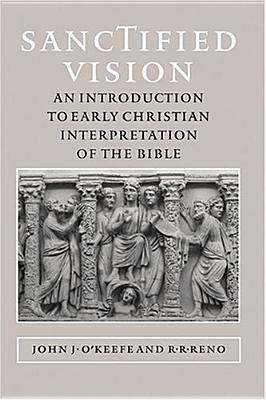
Completing our study of O’Keefe and Reno’s Sanctified Vision, we turn to the idea, widespread throughout patristic interpretation, that a life of spiritual discipline is the prerequisite for correctly interpreting Scripture. The authors contend that even this is not a totally foreign concept in the modern world; we might judge a work of history, in part, on the historian’s reputation for fairness and trustworthiness. But, for the Fathers, the divine nature of Scripture calls for a far deeper level of commitment: “The goal of patristic exegesis was to pass through the narrow opening that led to thoughts that participated in the unspeakable mysteries, and only a person whose vision has been refined by prayer, fasting, and self-control could hope to effect such a passage” (129).

I’ve always been fascinated by Origen’s threefold approach to Scripture. Drawing on his anthropology, which divided human nature into body, soul, and mind, Origen correspondingly divided Scripture into literal, moral, and spiritual senses. But O’Keefe and Reno bring out the less obvious logic that illuminates Origen’s hermeneutical move: for Origen, God created the human body for the explicit purpose of pointing us towards the spiritual. That is, “God has established an economy of bodily existence that puts pressure on our finite lives, and that pressure, experienced as suffering, drives us upward, toward the spiritual” (134). The trials of this life that we experience in our bodies (hunger, injury, disease, death) drive us to consider and long for spiritual realities.

Quite brilliantly, Origen extends this idea to Scripture: “Interpretation takes place within the literal sense that God has arranged so as to direct readers toward the spiritual sense” (135). Just as with the tribulations of the physical body, so the bodily (literal) sense of Scripture is filled with difficulties (confusing passages, apparent contradictions, moral impossibilities), pointing us to the deeper, spiritual truths and realities. O’Keefe and Reno bring summarize Origen’s position well:

It is as if Origen had anticipated the experience of every pious student who, having enrolled in a course of modern biblical studies, is confronted  by a professor who spends a great deal of time showing just how badly the Bible fits with his inherited faith. This experience naturally evokes a Job-like question. ‘Why has God so organized his witness that the more I learn about it, the more difficult it is to make sense of it?’ For Origen, the answer is simple. To know the languages, to be capable of memorizing the text, to have intellectual ability, even to possess the rule of faith, is not enough. We interpret truly when we see that the scriptural text teaches the mystery of God and the carnal eye cannot see the brightness of the holiness of God” (138). In other words, the difficulties of Scripture point us on the path of discipleship: “Reading is difficult because God wants us to suffer the dry deserts of incomprehension as so many days of interpretive fasting. Thus disciplined by the body of scripture, our vision is sanctified and prepared for us to enter into the narrow footpath” (139).

As I look at it, Origen is quite close to Jesus’ own teaching on the matter. After all, did Jesus not come teaching in parables precisely so that “they may be ever seeing but never perceiving, and ever hearing but never understanding, otherwise they might turn and be forgiven” (Mark 4.12)? And here we have our answer to what might be the most common critique of Origen’s firm conviction in a hidden, spiritual sense of Scripture: shouldn’t God make His Word of the utmost clarity, so that even the most ordinary man can understand? No doubt, the “basics” of Scripture (what is “necessary for life and godliness,” as some have put it) are evident to all. But why would God be content for anyone to stay at the “basics”? Are we not to “move beyond the elementary teachings about Christ, and be taken forward to maturity” (Heb 6.1)? Rather than close our minds to the problems of Scripture, we need to be honest in wrestling with them (regardless of whether or not we accept all of Origen’s ascetic scheme) and consider that, perhaps, these have been placed there not to be flippantly harmonized but to be pondered, mediated upon, and even lived.

Posted in Patristic Exegesis | Tagged , , , | Leave a comment

Sanctified Vision (3): Typology, Allegory, and the Brady Bunch

“Allegory” might as well be a curse word for many literal-minded Christians. Dismissed, laughed at, scorned–allegorical interpretation of the Bible has fallen on tough times. But it was not always this way! Again, O’Keefe and Reno (Sanctified Vision, ch. 4-5) are here to provide a helpful explanation of the logic, and perhaps even the beauty, of allegorical interpretation. Allegory and typology are sibling reading strategies, as both seek the deeper, “spiritual” meaning of the text. The authors distinguish between the two only insofar as an allegorical reading requires “significantly more interpretive investment capital” than does a typological reading (90).

We first get a discussion of typology, “the most important interpretive strategy for early Christianity” (69). Broadly put, typological interpretation occurs “whenever somebody alludes to an event in a shared cultural narrative as a means of illuminating the present” (71). Thus, MLK Jr’s “I have a dream” speech typologically evoked the Exodus, and “having a Jan Brady moment” evokes a world of teen-age angst and emotion.S3-Jan_Brady_000067 Similarly, “a reader of the scriptures shows that the divine economy is recapitulated in Christ precisely by showing the countless instances in which specific details of the scripture are linked in a common pattern or type” (73). O’Keefe and Reno identify three different patterns of typology (explicit prefiguration of Christ, prefiguration of practices of the early church, and prefiguration of the lives of early Christians themselves). Thus, Joshua is a type of Christ, the Exodus is a type of baptism, and the martyrdom of Polycarp follows the type of Christ’s passion. In each case, interpreters are focusing on parallel patterns within Scripture and history.

Allegorical readings, then, are “interpretations that claim the plain or obvious sense of a given text is not the true meaning, or at least not the full meaning” (89). An allegorical reading “decodes” a text that cannot be understood literally, either because there is a literal meaning beyond the literal sense, or because the literal sense is obscure or problematic. Thus, Moses’ life can be allegorically understood as the life of faith of a Christian believer. And thus the Song of Songs, which posed interpretive problems for ascetic Christians, must be reinterpreted as not about sex but as the relationship between Christ and his church.

While O’Keefe and Reno again give helpful explanations and examples, their real genius comes in showing how our difficulties in understanding or appreciating patristic exegesis is not the fault of the Fathers but ourselves. For both typological and allegorical readings, the authors are concerned to make the point that the Fathers are not abandoning the actual narrative of the text; rather, they are intensely studying the smallest details of the narrative to make their interpretations. We cannot accuse them of failing to pay close attention to the text.

More importantly, the authors make the point that the objections of modern readers to typology and allegory are theological and not methodological. “In the end the controversy surrounding the practice of allegorical reading really has to do with the superstructure supporting the correspondes, not the intellectual act of making them” (109). Their point is that all interpretation takes place within a larger, master understanding of how the text and the world works (an “economy”). Thus, Marcus Borg’s book on Jesus interprets him in light of the type of a spirit-filled man who transforms society. Sigmund Freud interpreted Oedipus Rex allegorically according to his theory of psychosexual development. Feminist criticism reinterprets the writings of the Fathers to actually be about gender and authority, and not God and salvation. Even supposedly objective historical-critical scholars make use of larger conceptual frameworks to understand the past and its texts. In other words, “All historians need to presume an economy of causality and influence that allows them to connect events and organize the data into some meaningful whole… The scandal, if there is one, is in the economy that guides the interpretation, not the strategies of reading, even the allegorical strategy” (112).

Thus, a Freudian reading will seem to correctly decode the “true” meaning of Oedipus Rex to one who accepts a Freudian economy, and the feminist reading of the Fathers will likely be judged true by a person who accepts the historical assumptions of modern feminism. When it comes down to it, everyone is “guilty” of reading texts and thinking about reality in light of what we take to be the “deep structuring principles of reality.” Allegorical and typological interpretation simply make these clear. For the early Christians, the “deep structuring principle of reality” was the economy of the rule of faith, “that God governs all things, that human beings have fallen into sin, and that the only begotten Son, who is the Word of God in the creation of all things, becomes incarnate to draw human beings into the divine life and bring the created order to its final perfection” (112-3). We should not be surprised, then, that the Fathers would see the imprint of this reality throughout the biblical record and even in their own lives. Following Irenaeus, the Fathers believed that all of biblical revelation is structured by a Christ-centered structure, and they read it in light of this economy.

The Freudian, feminist, historical-critical, and rule of faith paradigms all may or may not be the “true” way to read and understand a given text. But it is nevertheless astonishing that so many Christians are so quick to dismiss a reading of Scripture that seeks to read it within the framework of a distinctively Trinitarian story of redemption. Indeed, one might be forgiven for suggesting that the model of reading Scripture used by the Fathers is more Christian that many of our modern assumptions about reading.

Posted in Patristic Exegesis | Tagged , , , , | Leave a comment

Update: Wright Thesis and L/PA Article

Two quick updates: (1) the final revised copy of my thesis (“History and the Victory of God: The Contribution of N. T. Wright to the Study of the Historical Jesus”) has been completed, turned in, and sent to the library; the updated, corrected final version has been posted on the “academic archives” tab; (2) for all three people breathlessly awaiting it (if that many?), the publication of my L/PA article has been pushed back to the summer issue of NovT (55.3). Nothing moves quickly in the world of academia…

Posted in Uncategorized | Tagged , , , | Leave a comment

Sanctified Vision (2): Intensive Reading

637606Previously, I discussed how patristic authors believed Jesus of Nazareth to be the interpretive key for understanding all of Scripture. Now, turning to chapter 3 of O’Keefe & Reno’s Sanctified Vision, we consider the first of three major methods of reading utilized within this overarching hypothesis: intensive reading.

The central thrust of this chapter is that a christocentric reading of Scripture does not diminish but in fact heightens the need for careful study and exegesis of the Scriptures. “Exploring countless scriptural details with an eye toward assembling a full and complete picture marks the most basic ‘method’ of patristic exegesis” (45). In other words, “The overall reading was not developed in broad strokes or with large abstractions; it was carefully constructed verse by verse. In this sense, for all the ambition of patristic biblical interpretation, the church fathers were intensive readers ever on the lookout for hints and signs amid the tiniest details of the text” (46).

O’Keefe and Reno identify three strategies of reading that fall under this “intensive” method of interpretation. The (1) lexical strategy analyzed the different meanings a single word could have in hopes of providing a reliable interpretation, while the (2) dialectical strategy focused on two apparently contradictory texts with an eye towards providing an interpretation that could harmonize the two. Neither of these should strike us today as particularly unusual; forms of them are still practiced today.

More interesting, though, is the (3) associative strategy, which “involves the countless ways in which particular words, images, or phrases are joined together in our minds” (48). An interpreter might jump from a verse about “wood” to one about “trees” and from there to several on “fruit-bearing” and so on and so forth. Part of our difficulty in grasping this method comes from modernity’s flattening out of language. For many of those who limit themselves to the historical-grammatical hermeneutic, the fear is that if words or texts are allowed to have more than one meaning, there is no end to the amount of subjective meanings they might have. I take it that this is the fear that drives many conservative Christians to embrace this hermeneutic. But postmodernism is helping us to recapture the intrinsic multivalency of language, such that we could agree with the Fathers, who “thought the scriptures infinitely rich, and, for them, interpretive adventure beckoned in every word and image” (67).

One other noteworthy point from this chapter: the authors make the remarkable claim that careful exegesis drove the development of doctrine, and not vice versa, as is normally claimed. In their discussion of dialectical interpretation, the authors write, “We tend to read figures such as Athanasius with the retrospective knowledge of the development and communal endorsement of his approach. This encourages us to think of the exegesis in treatises such as the Orations against the Arians as attempts to resolve unfortunate textual difficulties that stand in the way of ‘orthodox doctrine.’ … (but this) fails to see how a technical distinction in Christian theology, in this case the distinction between essence and economy, function within the exegesis rather than operating upon it from the outside, either as something to be defended or applied” (60). In other words, the exegetical results stemming from attempts to harmonize apparently contradictory passages of Scripture (e.g., the created or uncreated nature of the Son; cf. John 1:1 and Heb 3:2) were what produced what would become orthodox doctrine (as opposed to saying that these doctrines developed in an independent, theological sense and were then “back-proven” with reference to proof-texts). If this is true, this makes for a very, very different way of thinking about how early Christian theology developed!

Posted in Patristic Exegesis | Tagged , , , | 4 Comments